Your first paddle matters more than you might think.
Key Takeaways
- The best beginner pickleball paddle should have a 16mm core for a forgiving sweet spot and a textured surface for developing spin.
- Midweight paddles (7.6-8.0 oz) offer the best balance of control and power for new players.
- Avoid ultra-cheap paddles under $30. They use basic materials that limit your ability to improve and often break quickly.
- Investing in a quality paddle from the start saves money compared to buying cheap and upgrading within months.
- The Spinex NOVA is designed as an ideal first serious paddle: forgiving, comfortable, and built to grow with your game.
Not because you need anything fancy. But because the right paddle makes learning easier, more enjoyable, and a lot less frustrating. The wrong one does the opposite. A paddle with a tiny sweet spot punishes every off-centre hit. A surface with no texture makes spin almost impossible to develop. A build that feels cheap or unstable doesn't give you anything to trust.
The problem is, most beginners don't know what to look for. There are hundreds of paddles on the market, and the technical language around core thickness, surface material, and construction methods can feel confusing if you're just getting started.
This guide keeps it simple. We'll walk you through what actually matters in a beginner paddle, whether you should go cheap or invest early, and which paddle we'd recommend if you want to buy well the first time. (And if you want a broader look at the full market first, see our guide to the best pickleball paddles in Australia.)
What Makes a Good Beginner Paddle?
You don't need an advanced paddle to play well as a beginner. But you do need a paddle that gives you four basic things:

A forgiving sweet spot. The sweet spot is the area on the paddle face where contact feels clean and controlled. A bigger, more stable sweet spot means that even when you don't hit the ball perfectly (which happens a lot early on), the paddle still gives you a usable shot. This is the single most important thing in a beginner paddle.
A surface that supports spin. Spin isn't just for advanced players. Even basic topspin helps keep your shots in the court, and being able to add a little backspin to your dinks makes a noticeable difference early on. A paddle with a quality carbon fibre surface gives you that ability. A cheap fibreglass surface makes it much harder.
Comfortable weight. Most beginners do best with a paddle in the 7.8 to 8.2 oz range. Too light and it feels flimsy, with less stability on contact. Too heavy and your arm tires out halfway through a session. The middle ground gives you enough stability without the fatigue.
Solid, consistent construction. A well-built paddle feels the same every time you pick it up. The response is predictable. The frame doesn't flex or rattle. You start trusting your shots because the paddle gives you consistent feedback. Cheap paddles often lack this, which makes it harder to develop good habits.
You might notice that "maximum power" isn't on this list. That's intentional. Power is the last thing beginners need to worry about. Control, consistency, and comfort are what actually help you improve.
Should You Buy Cheap First or Invest in a Better Paddle?
This is the question every new player faces, and there are two reasonable paths.

Path A: Start with a budget paddle ($30 to $50). This makes sense if you've never played pickleball before and genuinely aren't sure whether you'll enjoy it. A basic fibreglass paddle from a reputable brand will get you on court. You'll be able to rally, learn the rules, and figure out whether the sport is for you.
The downside is that budget paddles come with real limitations. The sweet spot is usually small. The surface doesn't generate much spin. Build quality varies, and some cheap paddles develop dead spots or looseness within weeks. If you end up playing regularly, you'll almost certainly want to replace it within a few months.
Path B: Buy a quality mid-range paddle from the start ($100 to $150). This is the path we'd recommend if you've already played a few times and know you want to keep going. Or if you're the kind of person who'd rather buy one good thing than replace a cheap one.
A well-built browse the paddle range in this range typically gives you thermoformed construction, a 16mm core, and a more stable overall feel. That means a bigger sweet spot, better spin potential, more consistent response, and a paddle you won't outgrow in a month.
The honest maths: buying a $40 paddle and then upgrading to a $120 paddle three months later costs you $160 and a period of playing with gear that held you back. Buying the $120 paddle first costs you $120 and gives you a better experience from day one.
Neither path is wrong. But if you already know pickleball is your thing, Path B is the smarter investment.
Key Features to Look for in a Beginner Paddle
If you're comparing paddles and trying to make sense of the specs, here are the features that matter most for beginners. We'll keep it practical.

Paddle Surface: Why Material Matters
The surface of your paddle is the part that makes contact with the ball. It directly affects how much spin you can generate and how clean the ball comes off the face.

Fibreglass is the most common surface on entry-level paddles. It's affordable and offers a softer feel, but it provides limited texture for spin and less consistent ball contact overall.
Carbon fibre is the standard for mid-range and premium paddles. It's more responsive, gives you more grip on the ball for spin shots, and produces a cleaner, more predictable contact feel. Within carbon fibre, there are different grades. T700 is one of the higher-quality options, offering a denser weave that creates a more uniform hitting surface.
For beginners, the jump from fibreglass to carbon fibre is the single biggest upgrade you can make. You'll feel the difference immediately.
Core Thickness: Thicker Is Usually Better for Beginners
The core is the inner layer of your paddle, and its thickness affects how the paddle plays.
Thinner cores (13mm) produce a harder, punchier feel with more raw power, but the sweet spot is smaller and less forgiving. These are built for experienced players who value pop over consistency.
Thicker cores (16mm) offer a larger sweet spot, a softer and more controlled feel, and better forgiveness on off-centre hits. For beginners, this is almost always the better choice. You get more margin for error, which means more confidence, more rallies, and faster improvement.
Mid-range cores (14mm) split the difference. They're fine, but for most beginners, the extra forgiveness of a 16mm core is worth it.
Construction: What Thermoformed Means and Why It Helps
You'll see the word "thermoformed" on a lot of mid-range and premium paddles. Here's what it actually means.

Traditional paddles are assembled from separate pieces: the face, the core, the edge guard, all glued or pressed together. This works, but it can leave small inconsistencies in how the paddle responds, and the bond between pieces can weaken over time.
Thermoformed paddles are built differently. The entire structure is bonded under heat and pressure into a single unibody frame. The result is a more rigid, more stable paddle with a consistent feel across the entire face. It also tends to be more durable.
For beginners, the practical benefit is simple: the paddle feels the same every time. That consistency helps you develop muscle memory and trust your shots.
Weight: Finding What Works
Paddle weight comes down to personal comfort, but there's a sweet spot for most new players.
Light (under 7.5 oz) paddles are easier to swing fast, but they can feel unstable on contact. You lose some of the "planted" feeling that helps with control.
Mid-weight (7.6 to 8.2 oz) is where most beginners are happiest. You get enough mass for stable contact without your arm wearing out after 30 minutes.
Heavy (over 8.3 oz) paddles provide more power and stability, but can cause fatigue and slow down your reaction time at the net. Better suited to experienced players who know they want the extra weight.
If you're not sure, start in the mid-weight range. You can always adjust later once you know your playing style.
Our Recommendation: Best Beginner Paddle
Spinex NOVA, A$139

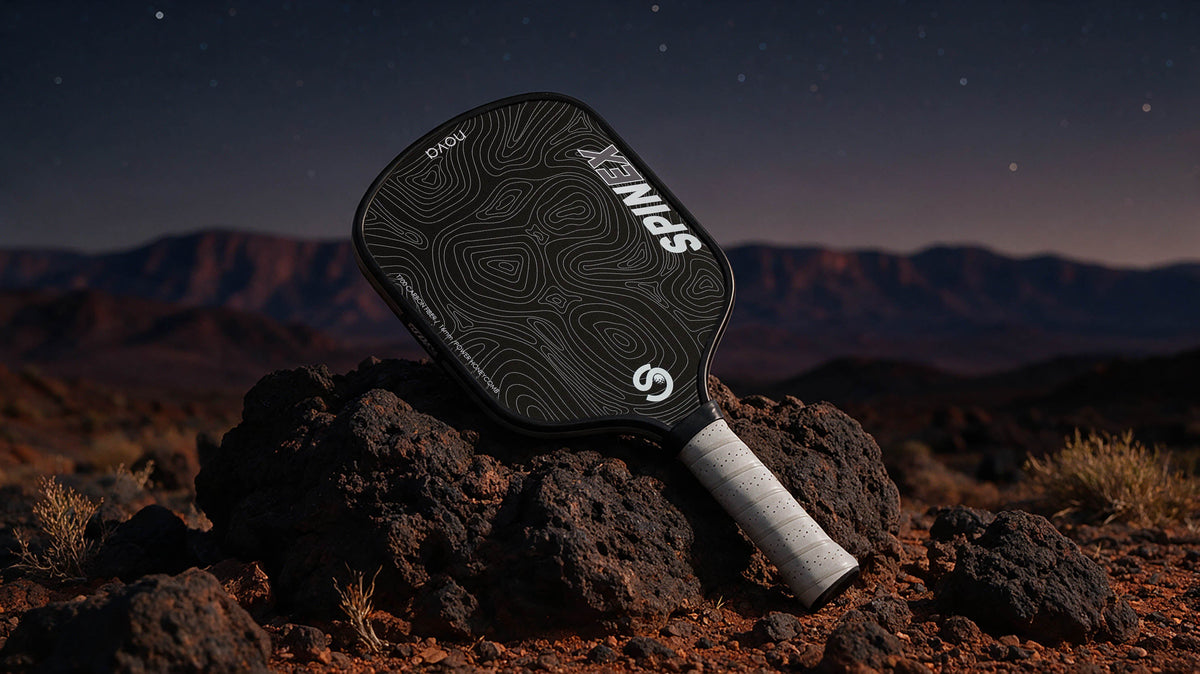
NOVA is the paddle we built for this exact moment. Built for beginners, with a wider face for more control. It is not a stripped-down starter paddle, and it is not an intimidating pro-level tool. It is a properly made carbon paddle at a price that makes sense for your first serious purchase.
Here is why it works for new players:
The T700 carbon fibre face gives you access to controlled spin from your very first session. You do not need advanced technique to benefit from it. Even basic swing paths produce cleaner contact and more predictable ball flight than a fibreglass surface.
The 16mm thermoformed core with a foam-filled perimeter creates a wide, forgiving sweet spot. Off-centre hits still produce usable shots instead of wild misfires. That forgiveness is what keeps beginners in rallies longer and builds confidence faster.
At 225g it sits in the comfortable mid-weight range, which matters more than most new players expect. A paddle that is too heavy shows up as wrist and elbow fatigue by the end of a long social session.
The widebody shape is the other quiet advantage. A wider face means a larger hitting area, which is exactly what you want while your contact point is still settling.
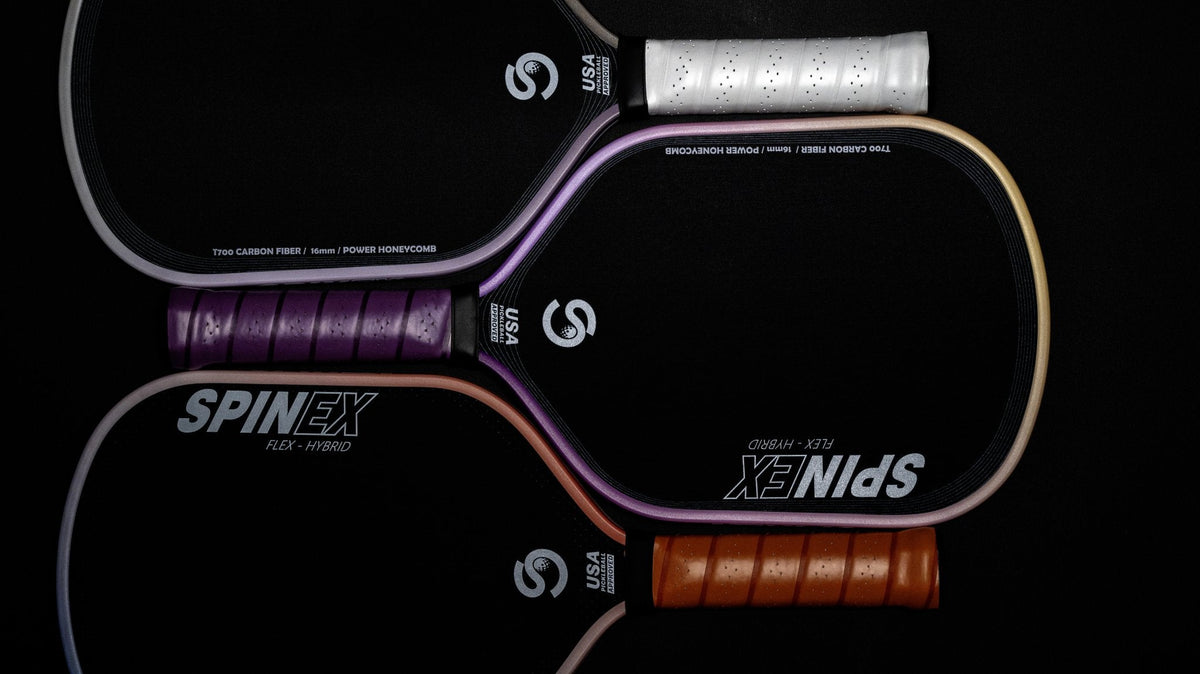
And then there is the part most paddle brands ignore: design. NOVA comes in three colourways, Outback Black, Salt Lagoon and Pink Stellar, each named after somewhere in Australia. If you have ever felt that most pickleball paddles look overly aggressive or just not your style, this one was designed with you in mind. A protective cover is included.
Our verdict: the best first paddle for players who want to start well rather than start cheap. Forgiving enough for your first week on court, and honest enough that you will still enjoy it a season later.
Key specs: T700 carbon fibre face · 16mm thermoformed core · foam-filled perimeter · widebody shape · 225g · cover included · designed and tested in Australia · A$139
If you already know you will keep playing
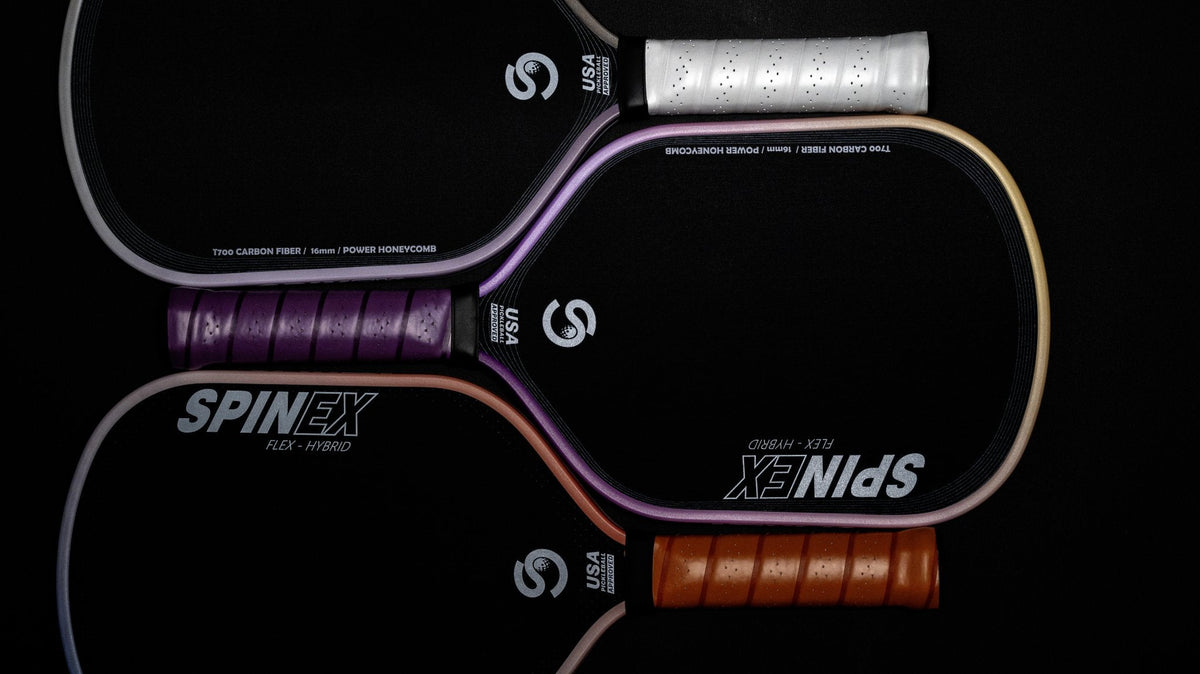
Some people know within a week that this sport has them. If that is you, and you would rather buy well once than upgrade in six months, the FLEX Hybrid at A$199 is the step up. It uses an edgeless build with a larger foam area and a more responsive core, and it is approved for sanctioned tournament play. For most people starting out, NOVA is the smarter first purchase. For players who are already sure, FLEX saves you a step.
Common Beginner Mistakes to Avoid
After talking to hundreds of players, we see the same mistakes come up again and again.


Choosing by price alone. The cheapest paddle gets you on court, but it often holds you back. If you're going to play regularly, the difference between a $40 paddle and a $120 paddle is enormous in terms of feel, control, and how fast you improve.
Buying too heavy or too light. Both extremes create problems. Too heavy wears out your arm. Too light feels unstable. Try to stay in the 7.8 to 8.2 oz range for your first paddle.
Ignoring the surface. The surface is what touches the ball. A textured carbon fibre surface gives you spin and control that a flat fibreglass surface simply can't match. This is the feature that makes the biggest single difference for beginners.
Thinking you need a power paddle. You don't. Not yet. Power paddles are designed for experienced players with established technique. As a beginner, control and forgiveness will improve your game faster than raw pop ever will.
Settling for a paddle that doesn't feel like yours. This sounds small, but it matters. If your paddle feels generic or doesn't reflect your personal style, you're less likely to pick it up. A paddle you genuinely enjoy using is a paddle you'll practise with more often.

Spinex NOVA
Built for beginners and social play. T700 carbon face, 16mm thermoformed core, forgiving widebody shape.
A$139
Shop the NOVA →Frequently Asked Questions
What weight pickleball paddle should a beginner use?
Most beginners do well with a paddle between 7.8 and 8.2 oz. This range gives you enough weight for stable contact without causing arm fatigue during longer sessions. Start here and adjust based on how your body feels after a few weeks of play.
Is carbon fibre better than fibreglass for beginners?
Yes, if your budget allows it. Carbon fibre surfaces provide better spin control, cleaner ball contact, and a more responsive feel. The difference is noticeable from the first session. Fibreglass works for a casual trial, but carbon fibre is the better foundation for actually developing your game.
How much should I spend on my first pickleball paddle?
If you're committed to playing regularly, the $100 to $150 range is the sweet spot. You get quality materials (carbon fibre surface, thermoformed construction, 16mm core) without paying for features only advanced players need. Below $50, quality drops significantly. Above $150, the improvements are incremental for beginners.
Can a beginner use a thermoformed paddle?
Absolutely. Thermoformed paddles aren't "too advanced" for beginners. In fact, the extra consistency and stability they provide is especially valuable when you're still building your technique. A more predictable paddle helps you develop better habits faster.
What is the best paddle for a female beginner?
The best paddle for any beginner, regardless of gender, is one with a forgiving sweet spot, a quality surface for spin, comfortable weight, and a design you genuinely like. That said, we hear from a lot of women that most paddle brands feel overly masculine in their styling. That's one of the reasons we designed the FLEX Hybrid with a more refined, naturally inspired aesthetic. Performance is the priority, but the way it looks and feels matters too.
Do I need a starter set or just a paddle?
If you already have balls and a place to play, just the paddle is fine. If you're starting from scratch and want everything in one box, a pickleball starter set is the easiest way to go from purchase to playing without having to source each piece separately.
Start With the Right Paddle
The best thing you can do as a new player is give yourself good equipment to learn with. Not the most expensive. Not the flashiest. Just something well-built, forgiving, and designed to help you get better.

If you are ready to choose your first quality paddle, NOVA is built for exactly this moment. Control, spin, a forgiving sweet spot, and a design that feels like yours.
If you'd rather start with a complete package that includes a paddle, balls, and accessories in one box, our pickleball starter sets are the fastest way to go from unboxing to playing.
And if you're still comparing options, browse our full pickleball paddle collection to see what fits your game.

Leave a comment
This site is protected by hCaptcha and the hCaptcha Privacy Policy and Terms of Service apply.