
Walk into any Kmart or Big W and you will find a pickleball set for the price of a large pizza. Two paddles, a few balls, sometimes a net, all in one box. It looks like a bargain, and in one important way it is. But the question most new players actually want answered is simpler. Will a cheap set hold you back, and when is it worth spending more?
We sell premium gear, so we have an obvious interest here. We are going to be honest anyway, because the honest answer is more useful. Cheap sets have a real job to do. They also have clear limits. Knowing both is how you avoid wasting money in either direction.
- A Kmart pickleball set with a net is about A$25. Big W sells one for around A$15. Both are fine for a first hit.
- Budget sets use wooden or basic composite paddles with thin cores. They feel harder, offer less control, and wear out faster.
- If you play weekly or join a club, a premium set is built for that workload in a way a A$15 to A$25 set is not.
- Our rule: buy cheap to test the sport, then buy once properly the moment you know you are hooked.

What you get in a Kmart or Big W pickleball set
Budget sets are built to a price, and the price is low. Here is what that buys in Australia right now.

The Kmart Pickleball Set with Net sells for about A$25. It comes with two wooden paddles, two balls, and a portable net. Big W runs an even cheaper option near A$15, with two wooden paddles, four balls, and a carry bag but no net. Target and a handful of online sellers sit in the same band, mostly under A$50.
For that money you get everything you need to play in a park or a driveway. The paddles are usually solid wood or a thin composite. The faces are smooth. The cores, if there is a core at all, are thin and hard. None of these listings claim USA Pickleball certification, and they are not meant to. If you are heading toward sanctioned competition, check the approved equipment list before you buy anything. These sets exist to get a family or a group of mates onto a court quickly.
When a cheap set is genuinely the right call
Here is the part premium brands often skip. A budget set is the correct choice more often than you would think.

Buy cheap if you have never held a paddle and want to see what the fuss is about. Buy cheap if you are kitting out kids who will grow, swing wildly, and leave gear in the rain. Buy cheap if you need four paddles for a barbecue this weekend and nobody there is serious yet. In all of these cases, spending A$200 on a proper paddle would be the real waste.
The value of a cheap set is that it removes every excuse not to try. At A$25 with a net, the Kmart option is genuinely hard to beat as a first step. We have watched plenty of committed players trace their whole pickleball habit back to one of these boxes. That is a win, not a compromise.
The trouble only starts when the sport sticks and the cheap paddle stays.
Where cheap sets fall short
A wooden paddle plays like a wooden paddle. It is stiff. The sweet spot is small. Off centre hits jar your arm and fly long. There is almost no bite on the ball, so spin is hard to produce and harder to control. None of this matters for a casual knockabout. All of it matters once you start caring about where the ball goes.

Weight is the other quiet problem. Retailer listings for budget sets do not specify a weight tolerance window, so there is no stated guarantee that the two paddles in the box will feel the same in the hand. A premium paddle line is built to a published weight window and checked against it. When we weighed 20 FLEX Hybrid paddles from one production batch, the average was 7.95 oz with a standard deviation of 0.09 oz (entry TS004). That consistency is not something a A$25 set is trying to deliver.
Are Kmart pickleball paddles worth buying on their own?
Plenty of people search for the paddles rather than the full set, usually because they already have a net or only need one or two bats. Kmart sells an assorted two paddle set at around A$15 with four balls, and the paddles inside it are plywood with a taped edge guard and a wrapped grip.
Bought on their own they make sense in exactly two situations: you need spares so visitors can join in, or you want something you will not mind leaving in the boot of the car. What they will not do is replace a proper paddle. The plywood face has no texture to grip the ball, the handle is short, and there is no core to soften contact, so every mishit travels straight into your forearm. If you are buying paddles rather than a set because you are already playing regularly, that is usually the signal to skip the A$15 pair entirely.
Durability is the last gap, and here we have to be careful about what we actually know. Retailer listings for these sets do not publish durability or weight tolerance data, and we have not run a controlled durability test on Kmart or Big W paddles. What we can say is what plywood and taped edge guards are built for, which is occasional use, and what we have measured on our own gear: five FLEX Hybrid paddles handed to club players were still structurally sound after more than five months of regular play (entry LO002). The table below sums up the trade-off as honestly as we can put it.
| Feature | Budget set (Kmart, Big W) | Premium set (carbon paddle) |
|---|---|---|
| Typical price | A$15 to A$25 | A$180 to A$350 (RRP) |
| Paddle face | Wood or thin composite, smooth | Carbon fibre, textured for spin |
| Core | Thin and hard, or none | 16mm polymer honeycomb |
| Control and sweet spot | Small, unforgiving | Larger, more forgiving |
| Weight matching | Not matched | Tight batch tolerance |
| Built for | Occasional casual use | Regular, repeated play |
| Best for | Trial, kids, casual park play | Weekly players, club play, improvers |

The real cost of buying cheap twice
This is where the maths turns. A cheap set only saves you money if you either stop playing or never upgrade. The moment you get hooked and want a proper paddle, the A$25 you spent earlier does not come back. It sits on top of the real purchase.
Put simply, the cheap set was never competing with a premium paddle. It was a A$25 trial that you either keep or graduate from. If you graduate, your total spend is the trial plus the real thing.

The chart is deliberately simple, and it is a model rather than a measurement. But the shape of it holds. If you already suspect you will keep playing, buying once is usually the cheaper path. If you genuinely might not, the trial set wins. That is the whole decision in one picture.
What a premium set gives you that a cheap one cannot
A premium set is not just a nicer paddle in a nicer box. The gap you feel is mostly the face and the core.
A carbon fibre face has a gritty texture that grabs the ball, so you can actually put spin on your shots and steer them. A well built 16mm polymer honeycomb core softens contact and widens the usable sweet spot, so off centre hits are more forgiving. Core thickness is not the whole story though. Face construction, weight and balance all feed into how a paddle actually plays. Tournament grade paddles have to meet published equipment standards for exactly these qualities, which cheap wooden paddles are not built to touch.
The core thickness point is not just theory. At a demo day we ran at Sydney Olympic Park in February 2026, more than 30 players tried our paddles back to back with their own. Four in five preferred the thicker 16mm core over thinner demo paddles, and players coming off wooden or composite gear noticed the extra grip and spin straight away.
Worth being clear about what that number is and is not. It was an informal preference test at a public demo day, not a blind controlled comparison, and the paddles being compared differed in balance and face construction as well as core thickness. It tells you what players preferred on the day. It does not on its own prove that 16mm is the faster or more accurate build.

First-party demo data. The jump from a thin hard paddle to a 16mm core is the one most beginners feel first. It is the main reason a A$139 NOVA plays so differently from a A$40 department store one.
Then there is the part that does not show up on a spec sheet. A premium set bought from a local brand comes with a warranty, local stock, and someone to email when something goes wrong. Spinex is designed by an Australian team and supported here at home, so returns and questions do not disappear into an overseas mailbox. A A$15 park set does not pretend to offer any of that, and it should not have to.
The Keeper Test: how to choose in three questions
You do not need a spreadsheet to decide. You need three honest answers. We call it the Keeper Test, and it works for almost everyone.
- How sure are you that you will keep playing? If the honest answer is "not very," start cheap. If it is "I already play most weeks," skip the trial set.
- How often will you actually play? Monthly and social points to a budget set. Weekly, or anything with a bit of competition in it, points to a real paddle.
- Who is it for? Young kids and pure casual play are happiest with cheap gear. An adult who wants to improve will hit the ceiling of a wooden paddle fast.
Two or three answers leaning toward commitment is your signal to buy once and buy properly. That usually means a starter kit rather than a bare paddle, so you get balls and a cover in the same box. If you would rather build your own, our guide to the best pickleball sets in Australia walks through the options at each price point.

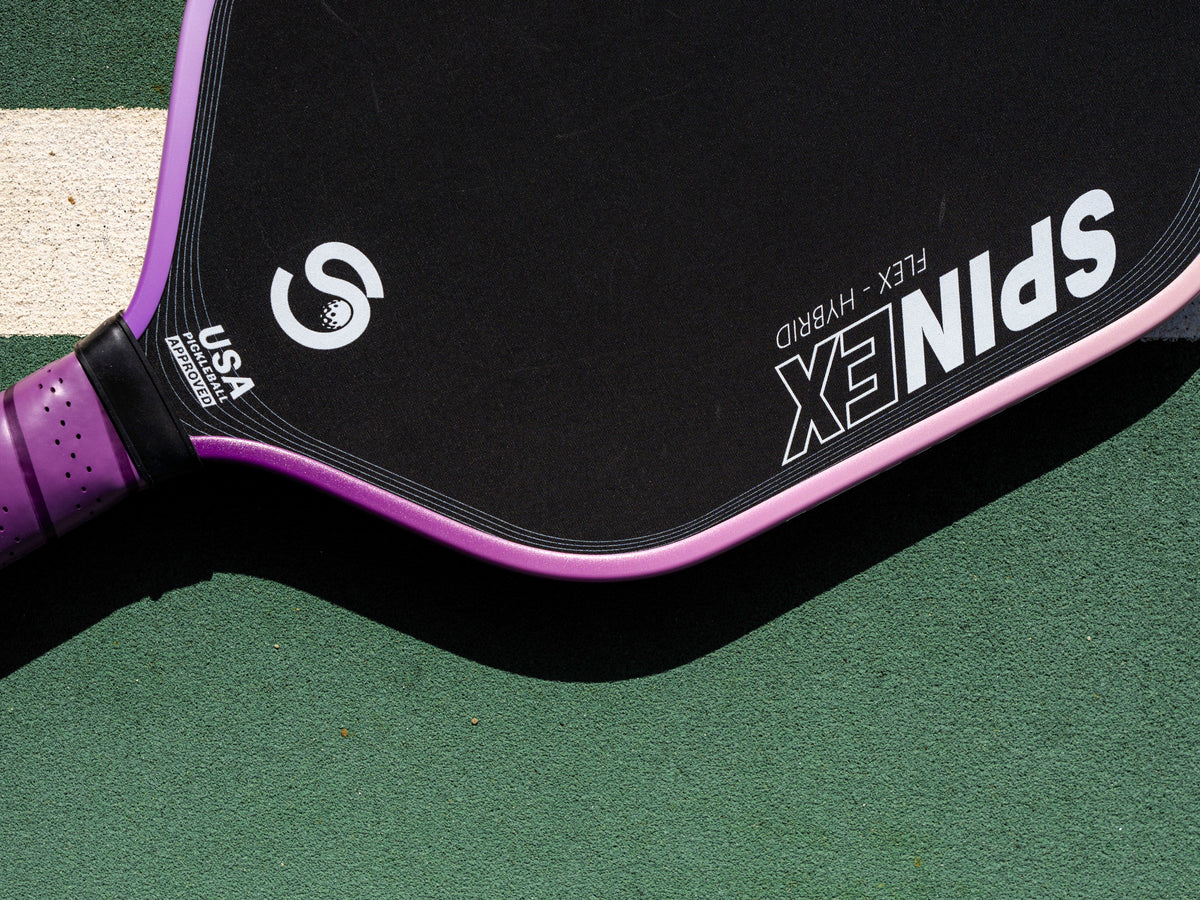
If the Keeper Test points you toward a real paddle, our own pick for a first proper one is the FLEX Hybrid. It is a control focused, balanced all court paddle rather than a power specialist, which is exactly what most players stepping up from a cheap set are looking for. It is forgiving enough to flatter a developing game, and good enough that you will not outgrow it in a season.
What is changing in budget pickleball gear
The cheap end of the market is not standing still. A year ago almost every set under A$50 came with plain wooden paddles. Now the same retailers list fibreglass faced sets alongside them. Kmart currently sells a Hacienda four paddle fibreglass set with six balls, a regulation net and a carry bag at A$199.95, and Big W stocks fibreglass paddle sets in a similar band.

That A$199.95 figure is worth sitting with, because it is roughly what one properly built carbon paddle costs. You are choosing between four entry level paddles plus a full net setup, or a single paddle you will still be using in two years. For a club or a family court that first option can be the right answer. For one player who has decided to improve, it usually is not.
That is good news and a small trap. A cheap "carbon" paddle is still built to a low price, so the core, the edge, and the weight matching usually give the game away. The face material headline improves faster than the parts you cannot see. For now the honest reading is simple. Budget sets are getting better at looking premium, but the real gap in control and durability is still there once you play often enough to feel it. Treat a cheap set as a trial, whatever the face is made of, and upgrade when the sport has earned it.

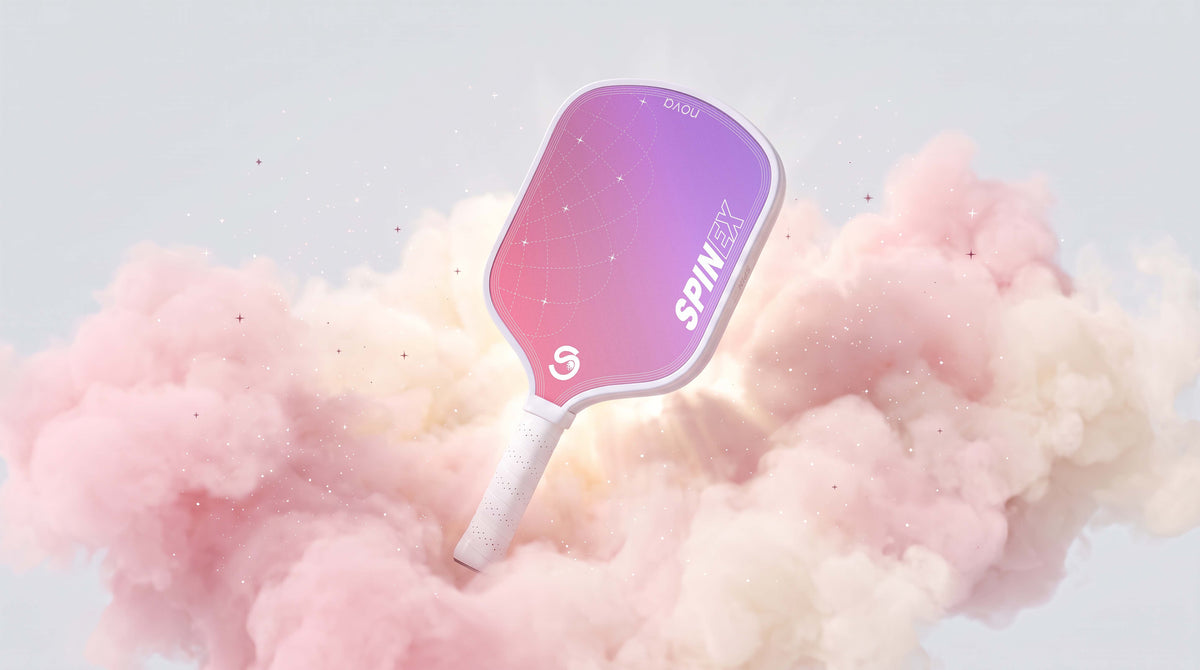
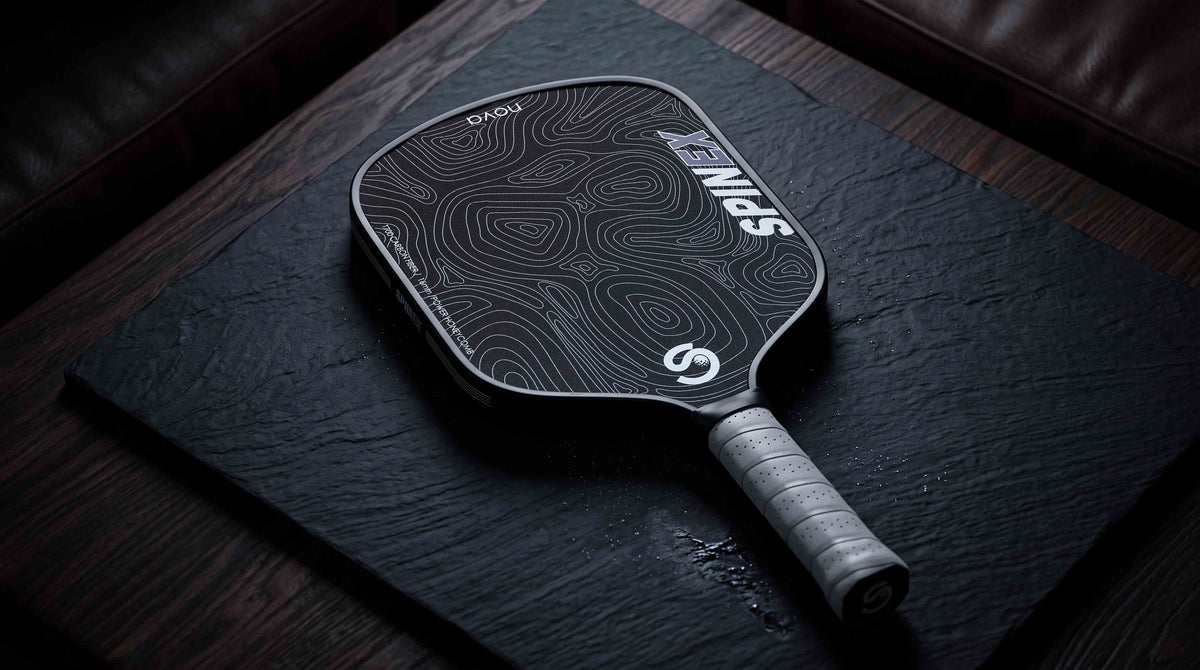
Spinex NOVA Doubles Bundle
Two NOVA paddles in your choice of colourways, ready for doubles from day one.
A$259
Shop the doubles bundle →Frequently asked questions
How much is a pickleball set at Kmart?
The Kmart Pickleball Set with Net is about A$25 and includes two wooden paddles, two balls, and a portable net. Kmart also stocks cheaper paddle only sets from around A$15. Prices were checked in July 2026 and can change.
Is the Kmart pickleball set any good?
For a first hit, yes. The wooden paddles are stiff with a small sweet spot and little spin, but they are perfectly fine for trying the sport, casual park play, or getting kids started. In our experience most players who stick with the sport start looking to upgrade within a few weeks to a few months, though that varies a lot with how often you play.
Kmart or Big W pickleball set, which is better?
They are close, and it depends on whether you need a net. Both retailers sell a two paddle set around A$15 without a net: Big W's comes with four balls and a carry bag, Kmart's assorted set comes with four balls. If you have nowhere to string a net, the A$25 Kmart Pickleball Set with Net is the better value because a separate net costs more than the A$10 difference. If you already play on a marked court, either A$15 option does the job.
Do cheap pickleball paddles actually affect how you play?
Yes, more than beginners expect. A wooden or thin composite paddle has a small sweet spot, offers little control on soft shots, and produces almost no spin. You can still play and have fun, but you will hit a ceiling as your game develops.
When should I upgrade from a cheap set?
Upgrade when you start playing weekly, join a club or social group, or notice you want more control and consistency than the paddle gives you. If two of those are true, a real paddle will feel like an immediate step up.
Are expensive pickleball paddles worth it?
If you play regularly, yes. The carbon face, thicker core, weight matching, and durability all add up to more control and a paddle that lasts seasons instead of weeks. If you only play a few times a year, a cheap set is the smarter spend.
What is a good first proper pickleball set in Australia?
Look for a starter kit built around a carbon faced paddle with a 16mm core, packaged with balls and a cover so you have everything in one box. In our range that is the FLEX Hybrid Starter Bundle at A$209 RRP, which pairs a control focused paddle with the accessories a new player needs.
Can I use a Kmart paddle at a pickleball club?
You can start with one, and nobody will mind at social sessions. It is not certified against USA Pickleball equipment standards, so it is not suitable for sanctioned tournaments, and you will likely want an approved paddle once you play club level regularly.
Ready to move on from the park set?
Shop pickleball sets Browse compare paddles side by side optionsThe FLEX Hybrid Starter Bundle pairs a T700 carbon paddle with balls and a cover from A$209 RRP. Designed and supported in Australia.
Whichever way you go, the point of a first paddle is to keep you playing. A cheap set does that job at the start. When you are ready for more, Spinex builds gear designed to grow with your game rather than hold it back.
Last reviewed: July 2026. Retail prices for third party sets were checked against live Kmart and Big W listings in July 2026 and may change. Premium performance claims are based on Spinex first-party testing (20 paddle weigh-in, 5 paddle five month durability tracking, and a 30-plus player demo day). This article is written and published by the Spinex Pickleball team. We design paddles and sell pickleball gear in Australia; where we recommend Spinex products it is because we believe they are a fair fit for the problem being discussed. We aim for honest, useful guidance even when the best answer is a cheaper option or a different brand. Get in touch if you have questions.

Leave a comment
This site is protected by hCaptcha and the hCaptcha Privacy Policy and Terms of Service apply.