
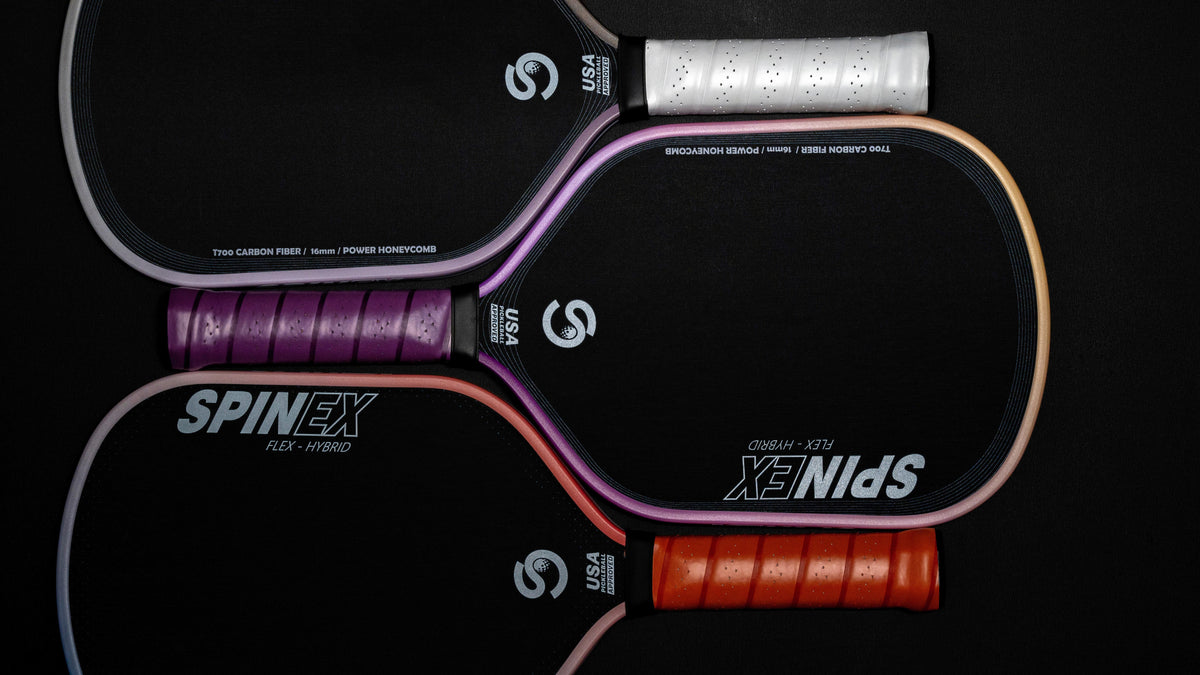
A control pickleball paddle is designed with a thicker core (typically 16mm or more) and balanced weight to absorb pace, enlarge the sweet spot, and give players more precision on every shot. A power paddle uses a thinner core (usually 14mm or less) and heavier build to generate faster ball speed and more aggressive pop off the face.
Choosing between control and power is the most important decision you will make when buying a paddle. It affects how forgiving your paddle feels, how accurately you can place dinks and drops, and whether your drives stay in or sail long. For most players, especially those still building consistency, a control paddle is the smarter starting point. But the right answer depends on your playing style, skill level, and what you actually struggle with on court.
• Control paddles use thicker cores (16mm+) for a larger sweet spot and softer feel. Power paddles use thinner cores (14mm or less) for faster ball speed.
• Core thickness is the single biggest factor separating control from power. Weight, face material, and shape play supporting roles.
• If your shots frequently go long or wide, a control paddle will help more than a power paddle.
• If you struggle to finish points or generate pace, a power paddle may suit your game better.
• Most beginners and intermediate players improve faster with a control or hybrid paddle. That is the thinking behind the NOVA series, which is built around control rather than pop.
• In 2026, the trend is shifting toward control and all-court paddles as new rules (PBCoR limits) reduce the advantage of raw power.

- What Makes a Paddle "Control" or "Power"?
- Core Thickness: The Single Biggest Factor
- Paddle Weight and the Control-Power Balance
- Face Material: How the Surface Affects Your Shots
- Paddle Shape: Wide Body vs Elongated
- Who Should Choose a Control Paddle?
- Who Should Choose a Power Paddle?
- What About All-Court and Hybrid Paddles?
- How to Test Whether You Need More Control or Power
- Frequently Asked Questions
- Choosing the Right Paddle for Your Game
What Makes a Paddle "Control" or "Power"?
Every paddle sits somewhere on a spectrum between pure control and pure power. The label comes from how the paddle handles incoming energy. A control paddle absorbs more of the ball's impact, slowing it down and giving you time to direct your shot. A power paddle returns more energy to the ball, sending it back faster with less effort from your swing.

Citation Capsule: According to paddle testing data, a 16mm core absorbs roughly 15 to 20 percent more impact energy than a 14mm core, which directly translates to a softer feel and more predictable ball placement at the net.
Five construction elements determine where a paddle lands on this spectrum: core thickness, weight, face material, shape, and handle length. Of these five, core thickness has the largest single impact on whether a paddle plays as control or power. The other four factors adjust the balance in smaller but meaningful ways.
When browsing pickleball paddles, you will often see labels like "control", "power", or "all-court". These are useful starting points, but understanding what creates that feel helps you make a more informed choice rather than relying on marketing alone.
Core Thickness: The Single Biggest Factor
Core thickness is measured in millimetres and typically ranges from 11mm to 20mm across the market. This one specification does more to define your paddle's playing characteristics than any other feature.

Here is how the main thickness categories compare:
| Core Thickness | Playing Style | Sweet Spot | Best For |
|---|---|---|---|
| 11-13mm | Maximum power | Smallest | Advanced players who can consistently hit centre-face |
| 14mm | Power-leaning | Moderate | Aggressive players wanting pace with some forgiveness |
| 16mm | Control-leaning | Large | Most players, especially beginners and all-court styles |
| 19-20mm | Maximum control | Largest | Touch-focused players who prioritise dinks and resets |
A thicker core gives you a larger effective sweet spot because the honeycomb cells have more room to compress and absorb energy evenly. This means off-centre hits still feel relatively clean. With a thinner core, off-centre shots lose accuracy more quickly, which is why power paddles demand better hand-eye coordination to use effectively.
Citation Capsule: The polymer honeycomb cores used in most modern paddles compress between 0.5mm and 1.2mm on impact. At 16mm thickness, this compression creates a longer dwell time of approximately 3 to 5 milliseconds, giving the ball more contact time on the face for directional control.
If you are not sure where to start, 16mm is the most popular thickness across all skill levels and the most recommended for players who want a balanced feel. For a deeper look at how thickness affects play, see our guide on paddle weight and how it affects your game.
Paddle Weight and the Control-Power Balance
Weight works alongside core thickness to fine-tune how a paddle feels. Heavier paddles (8.0 oz and above) naturally generate more momentum, which adds pace to your shots without extra effort. Lighter paddles (under 7.6 oz) are easier to manoeuvre quickly, which helps with reaction time at the net and precise shot placement.

The typical weight ranges break down like this:
| Weight Range | Feel | Trade-off |
|---|---|---|
| Under 7.3 oz (207g) | Very light, fast hands | Less inherent power, may feel unstable on hard drives |
| 7.3-7.8 oz (207-221g) | Light-medium, good manoeuvrability | Balanced for control players, less drive power |
| 7.8-8.2 oz (221-232g) | Medium, versatile | Good balance of control and power for most players |
| 8.3 oz+ (235g+) | Heavy, powerful drives | More power, but slower hand speed and arm fatigue risk |
A common combination for control-oriented paddles is a 16mm core with a weight between 7.6 and 8.2 oz. This gives you enough mass to keep the ball stable on soft shots while staying light enough for quick exchanges at the kitchen line. Power paddles often pair a thinner 14mm core with weight above 8.0 oz to maximise drive speed.
Face Material: How the Surface Affects Your Shots
The paddle face is what actually contacts the ball, and the material used changes how energy transfers between them. The three main face materials are carbon fibre, fibreglass, and graphite.

Carbon fibre is the stiffest of the three, which means it returns the ball more predictably with less deflection. This stiffness gives you better directional control and a consistent feel across the face. Higher-grade carbon fibre like T700 also provides a textured surface that generates spin naturally. Most serious control paddles in 2026 use carbon fibre faces.
Fibreglass has more flex than carbon fibre, creating what players call a "trampoline effect". The face bends slightly on contact and springs back, adding ball speed. This makes fibreglass faces popular in power-oriented paddles. The trade-off is slightly less shot-to-shot consistency compared to a stiffer face.
Graphite sits between the two. It offers a solid, responsive feel but is less common in newer paddle designs as carbon fibre technology has advanced.
Citation Capsule: T700-grade carbon fibre has a tensile strength of approximately 4,900 MPa, making it roughly 40 percent stiffer than standard fibreglass composite. This stiffness directly reduces face deflection on contact, producing tighter shot groupings and more spin from the textured surface.
For a detailed breakdown of how these materials compare, our guide on carbon fibre vs fibreglass paddles covers the differences in depth.
Paddle Shape: Wide Body vs Elongated
Paddle shape affects the size and position of the sweet spot, which in turn affects control and power. There are three common shapes, each with a different balance.
Standard (wide body) paddles are typically around 8 inches wide and 15.5 to 16 inches long. The wider face creates a large, centred sweet spot that is forgiving on off-centre hits. This shape favours control and is popular with beginners and doubles players who need quick reactions at the net.
Elongated paddles stretch to 16.5 inches or longer while narrowing to around 7.25 to 7.5 inches wide. The extra length adds reach and swing momentum for drives and serves, but the sweet spot shifts higher on the face and becomes narrower. This shape leans toward power and reach at the cost of some forgiveness.
Hybrid shapes split the difference, usually measuring around 16 to 16.5 inches long and 7.5 inches wide. They offer slightly more reach than a standard shape while keeping the sweet spot large enough to feel forgiving. This is currently the most popular shape category for players who want versatility across all shot types.
Who Should Choose a Control Paddle?
Control paddles are the right choice for a wider range of players than most people expect. You should lean toward control if any of these apply to you:

You are a beginner or improving player. When you are still developing your swing mechanics and shot placement, a forgiving paddle helps you build consistency faster. A control paddle will not punish you as harshly for off-centre hits, and it makes learning drops, dinks, and resets much easier.
Your shots frequently go long or wide. This is the clearest signal. If the ball regularly sails past the baseline or clips the sideline when you do not intend it to, your paddle is returning too much energy. A thicker core and controlled response will tighten your shot placement.
You play doubles regularly. Doubles pickleball rewards precision at the kitchen line more than raw power. Quick hands, soft resets, and accurate dinks win more rallies than hard drives. A control paddle is purpose-built for this style of play.
You are coming from tennis or racquetball. Players switching from racquet sports often already generate plenty of power from their swing mechanics. Adding a power paddle on top of that tends to send balls long. A control paddle lets you use your existing athleticism while learning pickleball-specific touch.
At Spinex, we designed our paddles around this principle. Most new players benefit more from precision and forgiveness than from extra pop, and improving players tend to notice the difference control makes within the first few sessions on court.
Who Should Choose a Power Paddle?

Power paddles suit a narrower player profile, but they are the right tool for certain situations:
You already have strong control fundamentals. If you can consistently place your drops and dinks, and your main weakness is finishing points, added pace from a power paddle can close that gap. This typically applies to players at an intermediate level (3.5+ DUPR) or above.
You play aggressive singles. Singles pickleball involves more baseline rallies and hard drives. A power paddle helps you apply pressure from deeper in the court where control-focused paddles may not generate enough pace.
You have a compact, controlled swing. Some players naturally take shorter, more compact swings. A power paddle compensates for shorter swing arcs by adding ball speed through the paddle's construction rather than swing length.
The most common mistake is buying a power paddle too early. New players often assume more speed will fix their game, but what actually happens is the ball travels faster and less accurately. If you are still working on where the ball goes rather than how fast it gets there, control is almost always the better investment.
What About All-Court and Hybrid Paddles?
If you are reading this and thinking "I want a bit of both", you are not alone. All-court (or hybrid) paddles sit in the middle of the spectrum, combining a medium-thick core (usually 16mm) with a balanced weight and a shape that does not lean too far toward reach or width.

Citation Capsule: In 2026, all-court paddles with 16mm cores account for the largest share of new paddle sales. Industry analysts note that PBCoR (Paddle Ball Coefficient of Restitution) limits introduced by USA Pickleball have reduced the performance gap between power paddles and all-court designs, making balanced options more competitive than ever.
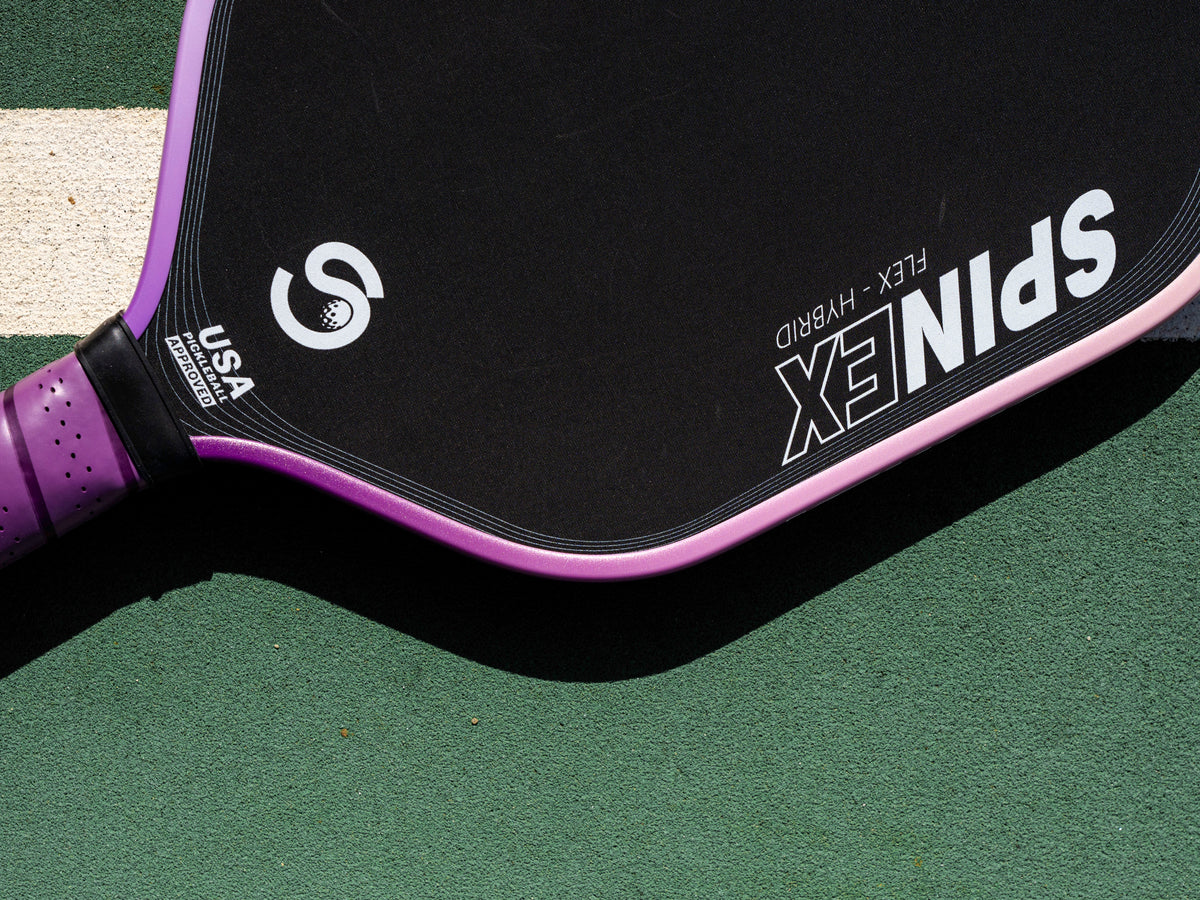
The FLEX Hybrid is a good example of this approach. It pairs a 16mm polymer honeycomb core with a T700 carbon fibre face and a slightly elongated hybrid shape (16.5 x 7.5 inches), weighing between 7.8 and 8.2 oz. The result is a paddle that prioritises control and touch while still providing enough pop for drives and serves when you need it. At $199 AUD, it sits in the mid-range for paddles with these specifications.
For players who genuinely cannot decide, an all-court paddle is the safest starting point. You can always adjust later by adding lead tape (for more power) or switching to a lighter grip (for more control), but starting balanced gives you the most flexibility.
How to Test Whether You Need More Control or Power
If you already own a paddle and want to figure out which direction to go next, here is a simple on-court test:
Step 1: Play 10 minutes of cross-court dinking with a partner. Count how many of your dinks land outside the kitchen or go into the net. If more than 30 percent miss, you likely need more control.
Step 2: Play 10 minutes of baseline rallies. Focus on driving the ball to a target area. If you struggle to generate enough pace to keep your opponent back, or your drives consistently land short, you may benefit from more power.
Step 3: Play a full game and note where your errors come from. If most unforced errors are from shots going long or wide, control is the answer. If most errors come from failing to put balls away or getting pushed back by your opponent's pace, power might help.
Most recreational players who do this test honestly find that their errors lean toward "too long" or "too wide" rather than "not enough pace". This is why control paddles outsell power paddles across all skill levels.

Spinex FLEX Hybrid
Control-focused all-court paddle. 6-layer T700 carbon face, 16mm thermoformed core, USAP-approved.
A$199
Shop the FLEX Hybrid →Frequently Asked Questions
Is a control or power paddle better for beginners?
A control paddle is better for most beginners. The thicker core creates a larger sweet spot that forgives off-centre hits, and the softer response helps new players develop accuracy before worrying about speed. Building control first creates a stronger foundation for every other aspect of your game.
What core thickness should I choose for control?
A 16mm core is the most popular choice for control-oriented play. It provides a large sweet spot and forgiving feel while still allowing enough ball speed for drives and serves. Cores of 19 to 20mm offer even more control but sacrifice noticeable power and may feel sluggish for some players.
Can I add power to a control paddle later?
Yes. Adding 3 to 6 grams of lead tape to the top edge of a control paddle increases its swing weight, which adds power to drives and serves. This is a common modification that lets you fine-tune your paddle without buying a new one. Start with 3 grams and increase gradually until you find the right balance.
Does face material matter more than core thickness?
Core thickness has a larger impact on the overall control-power balance. Face material plays a supporting role. Carbon fibre faces add stiffness and spin potential (leaning toward control), while fibreglass faces add flex and pop (leaning toward power). For most players, core thickness should be the first decision and face material the second.
Are carbon fibre paddles better for control than fibreglass?
Generally, yes. Carbon fibre is stiffer than fibreglass, which means the face deflects less on contact and returns the ball more predictably. This makes shot placement more consistent, which is the foundation of control play. Fibreglass faces have more flex, which generates extra ball speed but introduces slightly more variation in shot direction.
What is the difference between a hybrid paddle and a control paddle?
A hybrid (or all-court) paddle is designed to balance control and power without leaning heavily in either direction. Most hybrids use a 16mm core and medium weight. A dedicated control paddle may use an even thicker core (19 to 20mm) and lighter weight to maximise touch and precision at the expense of drive power. For most recreational players, a well-built hybrid provides all the control they need.
How does paddle weight affect control?
Lighter paddles (under 7.6 oz) are easier to position quickly, which helps with reaction shots at the net. Heavier paddles (above 8.2 oz) are more stable on contact, which can improve consistency on groundstrokes. The ideal control weight for most players falls between 7.6 and 8.2 oz, where you get enough stability without sacrificing hand speed.
Should I choose a wide or elongated shape for control?
A standard wide-body shape (around 8 inches wide) provides the largest, most centred sweet spot and is the most forgiving option. A hybrid shape (around 7.5 inches wide, 16.5 inches long) offers a good balance of forgiveness and reach. Elongated shapes sacrifice sweet spot width for length, which is better suited to power-oriented play. For pure control, wider is generally better.
Choosing the Right Paddle for Your Game
The best paddle is the one that matches how you actually play, not how you wish you played. If you are still building your skills, a control paddle with a 16mm core, carbon fibre face, and balanced weight between 7.6 and 8.2 oz will serve you well across every situation. If you already have strong fundamentals and need more finishing power, a 14mm core with a heavier build can sharpen your attack game.
Browse our full range of see all paddle options options to find the right balance of control and power for your playing style. Every paddle in the collection includes detailed specs so you can compare core thickness, weight, and face material before you buy.

Leave a comment
This site is protected by hCaptcha and the hCaptcha Privacy Policy and Terms of Service apply.