
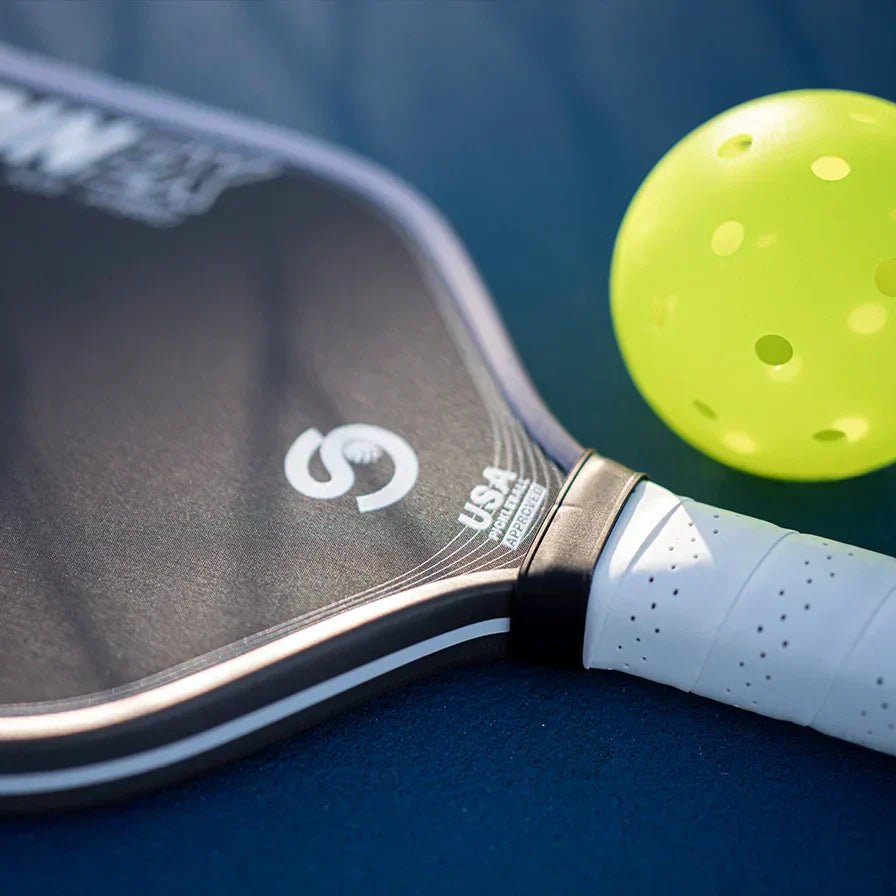
Cleaning a pickleball paddle means wiping the face with a damp microfibre cloth after every session and deep cleaning with a rubber paddle eraser every one to two weeks. Regular cleaning removes ball residue that builds up in the surface texture, restores spin potential, and can extend your paddle's useful life from one year to three or more.
Most players notice their spin dropping off after a few weeks of play. The cause is almost always the same: tiny plastic fragments from the ball embed themselves in the textured paddle face, filling the grooves that generate friction. A quick post-session wipe prevents this buildup, and a deeper clean with a dedicated eraser brings back the grit you need for consistent topspin and slice.
This guide covers every aspect of pickleball paddle care, from daily surface cleaning and grip maintenance to proper storage and edge guard protection. It does not cover paddle repairs, dead spot diagnosis, or performance testing. Whether you are a beginner learning the basics or an advanced player competing in tournaments, these habits will keep your pickleball paddles performing at their best for longer.
Last updated: April 2026
Key Takeaways
- Wipe your paddle face with a damp microfibre cloth after every playing session to prevent ball residue buildup.
- Deep clean carbon fibre surfaces with a rubber paddle eraser every 1 to 2 weeks.
- Never use Magic Erasers on carbon fibre faces. They act as micro-abrasives and permanently strip surface grit.
- Replace overgrips every 20 to 30 hours of play, or roughly once a month for regular players.
- Store your paddle at room temperature in a protective cover. Car interiors can reach 60°C and warp core materials.
In This Guide

- Why Cleaning Your Pickleball Paddle Matters
- How to Clean Your Pickleball Paddle Surface
- Cleaning Carbon Fibre Paddle Faces
- How to Clean and Maintain Your Paddle Grip
- Protecting Your Paddle Edge Guard
- How to Store Your Pickleball Paddle Properly
- How Often Should You Clean Your Paddle?
- Common Paddle Care Mistakes to Avoid
- Frequently Asked Questions
Why Cleaning Your Pickleball Paddle Matters
Every time a pickleball hits your paddle, microscopic plastic particles transfer from the ball to the paddle face. Over dozens of rallies, these particles fill the tiny grooves in the surface texture that create friction. The result is a smoother face that generates less spin, reduces ball control, and makes your shots less predictable for opponents.
For carbon fibre paddles specifically, the raw textured surface is what gives you grip on the ball. Once that texture fills with debris, no amount of technique adjustment can compensate. Cleaning is the only way to restore it.
We confirmed this firsthand at the Spinex testing lab. We took two identical FLEX Hybrid paddles and played with both for four weeks. One was wiped down after every session and eraser-cleaned weekly; the other received no cleaning at all. By week two, the uncleaned paddle had a visible white film across the face, and ball grip on topspin serves felt noticeably weaker. By week four, the difference was obvious to every player who tested both paddles back to back.
A 2024 test by The Dink found that paddle erasers made of crepe rubber removed embedded ball residue without damaging the carbon fibre texture, while Magic Erasers acted as micro-abrasives that permanently reduced surface grit by smoothing the fibres themselves.
Beyond spin, a clean paddle surface also gives you more consistent feel on dinks and resets. Ball residue buildup around the sweet spot reduces the paddle's responsiveness, affecting both power and touch. If your soft game has felt "off" lately, a dirty paddle face is often the simplest explanation and the easiest fix.
How to Clean Your Pickleball Paddle Surface
Daily surface cleaning takes under 30 seconds and is the single most effective thing you can do for paddle longevity. Here is the routine that works for all paddle face materials.
After Every Session (30 Seconds)
Dampen a clean microfiber cloth (also spelt microfibre) with lukewarm water. Wipe the entire paddle face using gentle, straight strokes from top to bottom. Do not scrub aggressively, as this can push debris deeper into the surface texture. Flip the paddle and repeat on the other side. Wipe the edge guard and paddle handle to remove any court dust. Let the paddle air dry completely before putting it away. Avoid paper towels as they can leave fibres behind.
Weekly Deep Clean (2 to 3 Minutes)
For a deeper clean, add a small drop of mild dish soap to your damp cloth. Wipe the surface with light pressure, focusing on areas where ball marks are visible. Rinse the cloth and wipe again with plain water to remove soap residue. Allow 30 to 60 minutes of air drying before your next session.
Avoid household cleaners, glass cleaners, or any product containing alcohol or ammonia. These chemicals can leave a sticky film that attracts more dirt and may degrade the paddle's clear coat or adhesive over time.

Cleaning Carbon Fibre Paddle Faces
Carbon fibre paddles need an extra cleaning step beyond the basic wipe. The raw textured surface that makes T700 and similar carbon fibres so effective for spin also traps ball residue more deeply than fibreglass or composite faces.
Using a Paddle Eraser (The Right Way)
A paddle eraser is a block of raw crepe rubber designed specifically for pickleball paddles. Hold your paddle firmly on a flat surface. Using moderate pressure, rub the eraser across the face in one direction, working from the top of the paddle to the bottom. The rubber grips and pulls embedded plastic particles out of the carbon fibre grooves without scratching or smoothing the surface.
You will see grey or white residue collecting on the eraser as it works. This is normal and means ball debris is being removed. After cleaning, wipe the face once more with a damp cloth to remove any loose particles.
If you own a carbon fibre paddle like the FLEX Hybrid, Spinex makes a raw carbon paddle cleaner for exactly this purpose, priced at $6.99. It works on any carbon fibre paddle, not just Spinex models. We have been using the same eraser on our demo paddles for over three months now, and it still performs well with no noticeable degradation. One block typically lasts 6 to 12 months depending on cleaning frequency.

Why You Should Never Use a Magic Eraser
This is the most common cleaning mistake in pickleball. Magic Erasers (melamine foam) feel soft but are actually micro-abrasive. Using one on a carbon fibre face is equivalent to rubbing the surface with fine-grit sandpaper. It will remove dirt, but it will also permanently strip the textured grit pattern that generates spin.
The damage is irreversible. Once the carbon fibre texture is smoothed, no amount of cleaning or erasing will bring it back. Your paddle will feel "dead" for spin, even though it looks clean. For carbon fibre vs fibreglass paddles, the textured face is the primary performance advantage, so protecting it matters.
Magic Erasers are made of melamine foam, which registers around 4 on the Mohs hardness scale, similar to a copper coin. On a carbon fibre paddle face, this is abrasive enough to flatten the raw grit texture in just 3 to 5 cleaning sessions, causing permanent spin loss that cannot be reversed.
How to Clean and Maintain Your Paddle Grip
Your grip accumulates sweat, oils, and court dust faster than the paddle face. A slippery grip affects shot accuracy, increases fatigue from over-gripping, and can even cause the paddle to twist on off-centre hits.
Cleaning Your Grip After Play
Wipe the grip with a dry towel immediately after playing. If the grip feels sticky or has visible dirt, use a cloth lightly dampened with water. You can also try a mild solution of white vinegar and water for stubborn grime, or a paste of baking soda and water for persistent odour. Make sure the grip is completely dry before storing. Moisture trapped under an overgrip creates bacteria and mold growth that speed up material breakdown.
When to Replace Your Overgrip
Overgrips are designed to be replaced regularly. Most manufacturers recommend changing them every 20 to 30 hours of play. For a player who hits the courts 3 times per week for 90 minutes each session, that is roughly every 4 to 6 weeks.
Signs your overgrip needs replacing include visible wear or smoothing, loss of tackiness, a shiny or hardened surface, and persistent odour even after cleaning. A fresh overgrip costs under $4 per wrap and makes an immediate difference to comfort and control. Some intermediate and recreational players also add grip tape for extra cushioning or to build up handle circumference. The pickleball accessories section at Spinex carries overgrips in 4 colour options at $9.99 for a 3-pack.
Overgrip vs Replacement Grip
An overgrip is the thin outer layer you wrap over the base grip. It is meant to be swapped out frequently. The base grip (or replacement grip) is the thicker cushioned layer underneath. Base grips last 3 to 6 months for regular players and should be replaced when the cushioning feels flat or compressed.
Most players only need to change overgrips regularly. Replacing the base grip is a less frequent maintenance task that you will notice when the handle starts feeling too thin or hard, even with a fresh overgrip on top.

Protecting Your Paddle Edge Guard
The edge guard is the protective bumper strip around your paddle's perimeter. It absorbs ground strikes, accidental drops, and contact with the net post. A damaged edge guard exposes the paddle core to moisture and impact that can cause delamination.
What Causes Edge Guard Damage
The three most common causes are heat exposure (which weakens adhesive), ground contact during low dinks, and accidental drops on hard court surfaces. Humidity above 70% also accelerates adhesive degradation over time. Players who frequently scrape their paddle on the court during defensive shots will see edge guard wear much faster.
Inspecting and Repairing Edge Guards
Check your edge guard every few weeks for peeling, cracks, or loosening at the corners. Small lifts can be re-glued with cyanoacrylate (CA) gel before they worsen. Clean the area with rubbing alcohol first to remove old adhesive, then apply a thin line of gel glue and press firmly for 30 seconds.
If the edge guard is cracked or badly warped, replacement is more difficult because guards are typically moulded for specific paddle models. In that case, edge guard tape is a practical temporary fix that costs under $10 and adds a fresh layer of protection.
How to Store Your Pickleball Paddle Properly
Storage mistakes cause more long-term paddle damage than anything that happens on court. Heat, humidity, and pressure are the three enemies of paddle longevity.
On a typical summer afternoon, a car interior can reach 60°C (140°F) or higher. At this temperature, the polymer honeycomb core inside a pickleball paddle begins to soften, the adhesive bonding the face to the core weakens, and edge guards start to peel. Leaving a paddle in a hot car for even a few hours can cause permanent warping.
Temperature and Humidity
Store your paddle in a climate-controlled room, ideally between 15°C and 30°C. Avoid garages, sheds, and car boots where temperatures swing widely. Humidity above 70% promotes moisture absorption in the honeycomb core, which can add weight to the paddle and lead to delamination over months.
Use a Paddle Cover
A neoprene or padded cover protects against scratches, dust, and accidental impacts during transport. For players who carry multiple paddles, a dedicated paddle bag offers even better protection along with compartments for balls and accessories. Store the paddle upright or flat in its cover rather than stacking other items on top, which can warp the face over time.
Keep It Dry
If you play outdoors in damp conditions, dry the paddle thoroughly before storing. Wipe the face with a dry cloth and leave the paddle uncovered in a dry room for 15 to 20 minutes before putting it back in its cover. This prevents trapped moisture from sitting against the paddle surface overnight.

How Often Should You Clean Your Paddle?
The right cleaning schedule depends on how frequently you play. Use this table to find the routine that matches your playing habits.
| Task | Casual (1-2x/week) | Regular (3-4x/week) | Competitive (5+x/week) |
|---|---|---|---|
| Surface wipe | After every session | After every session | After every session |
| Deep clean (eraser) | Every 2-3 weeks | Weekly | Every 3-5 days |
| Replace overgrip | Every 6-8 weeks | Every 4-6 weeks | Every 2-3 weeks |
| Inspect edge guard | Every 2-3 months | Monthly | Fortnightly |
| Check base grip | Every 6 months | Every 3-4 months | Every 2-3 months |
Common Paddle Care Mistakes to Avoid
Knowing what not to do is just as important as knowing the right routine. These are the mistakes that shorten paddle life or permanently reduce performance.
Submerging the paddle in water. Water can seep into the core through the edge guard seams and cause internal damage. Always use a damp cloth, never a soaking one.
Using harsh chemicals. Bleach, acetone, rubbing alcohol, and multi-purpose household cleaners can degrade the paddle's surface coating and adhesive layers. Stick to water and mild dish soap only.
Using Magic Erasers on carbon fibre. As covered above, melamine foam is abrasive enough to permanently destroy the surface grit on carbon fibre paddle faces.
Leaving the paddle in a hot car. Temperatures above 40°C soften adhesives and can warp the polymer honeycomb core. Even 30 minutes in a car on a warm day can cause damage.
Ignoring the grip. A worn grip forces you to squeeze harder, which increases arm fatigue and reduces touch on finesse shots. A $3 to $4 overgrip replacement solves the problem instantly.
Stacking paddles or placing heavy items on top. Sustained pressure can create subtle warping in the face that affects ball response. Store paddles upright or flat with nothing on top.
Frequently Asked Questions
Can I use water to clean my pickleball paddle?
Yes, a damp microfibre cloth with lukewarm water is the safest and most effective daily cleaning method for all paddle types. Wring out excess water so the cloth is damp rather than wet. Never submerge the paddle or run it under a tap, as water can enter the core through edge guard seams.
How do I restore spin on a carbon fibre paddle?
Use a rubber paddle eraser or raw carbon cleaning block to remove embedded ball residue from the textured surface. Rub in one direction with moderate pressure. This pulls plastic particles out of the carbon fibre grooves and restores the grit that generates spin. Deep clean every 1 to 2 weeks for best results.
Will a Magic Eraser damage my paddle?
On carbon fibre and raw carbon faces, yes. Magic Erasers are made of melamine foam, which is a micro-abrasive. Using one on a carbon fibre paddle permanently smooths the textured surface and reduces spin. On fibreglass or composite faces, the risk is lower, but a damp cloth and mild soap are still safer options.
How often should I replace my pickleball paddle overgrip?
Most players should replace their overgrip every 20 to 30 hours of play. For someone playing 3 sessions per week at 90 minutes each, that works out to roughly every 4 to 6 weeks. Replace sooner if the grip feels slippery, looks shiny, or has lost its cushioning.
Can I leave my pickleball paddle in the car?
No. Car interiors can reach 60°C or higher in summer, which softens the polymer honeycomb core, weakens adhesive bonds, and causes edge guard peeling. Always bring your paddle inside after playing. If you must leave it briefly, place it in an insulated bag in the boot rather than on the back seat in direct sunlight.
How do I fix a peeling edge guard?
For minor peeling, clean the area with rubbing alcohol to remove old adhesive, then apply a thin line of cyanoacrylate gel glue and press firmly for 30 seconds. For more extensive damage, edge guard tape provides a practical temporary fix. If the guard is cracked or warped, contact the paddle manufacturer about replacement options.
What is the best way to store a pickleball paddle?
Store your paddle in a padded cover at room temperature, between 15°C and 30°C. Keep it in a dry, climate-controlled space away from direct sunlight. Store it upright or flat without anything stacked on top. Avoid garages, sheds, and car boots where temperature and humidity fluctuate.
How long does a pickleball paddle last with proper care?
With consistent cleaning and proper storage, a quality pickleball paddle typically lasts 1 to 3 years for regular players and up to 5 years for casual players. The face surface wears gradually over time regardless of care, but good maintenance significantly extends the period of peak performance. Signs it is time to replace include persistent dead spots, visible face delamination, and loss of pop even after cleaning.
Looking after your paddle takes less than a minute per session and a few minutes per week. The reward is better spin, more consistent feel, and a paddle that performs at its best for years. If you are ready to explore paddles built for long-term performance, visit Spinex to see the full range.
Reviewed and fact-checked by the Spinex Pickleball team. Cleaning methods and product data verified against manufacturer specifications and hands-on testing.


Leave a comment
This site is protected by hCaptcha and the hCaptcha Privacy Policy and Terms of Service apply.