
Carbon fibre and fibreglass are the two most common face materials used in modern pickleball paddles, and they play very different roles on court. Carbon fibre is stiffer, lighter, and built for control and spin. Fibreglass is more flexible, delivers more power on contact, and tends to cost less. In Australia, carbon fibre paddles typically range from $100 to $300 AUD, while fibreglass options start from around $40 to $150 AUD.
If you're choosing between the two, the decision comes down to how you play and what you want from your paddle. This guide breaks down the real differences in performance, durability, spin, feel, and value so you can pick the right material for your game.
Key Takeaways- Carbon fibre paddles offer better control, spin, and durability, with surface grit that lasts 18 to 24 months of regular play.
- Fibreglass paddles generate more power with less effort, making them popular with beginners and players who rely on drives.
- Carbon fibre is roughly twice as strong as fibreglass (3,500 to 7,000 MPa tensile strength vs 1,500 to 2,500 MPa), which directly affects how the paddle responds to the ball.
- For most players upgrading from a starter paddle in Australia, a carbon fibre paddle in the $100 to $200 range offers the best long-term value.

- What Are Carbon Fibre and Fibreglass Paddles?
- Control vs Power: The Core Trade-Off
- Spin and Surface Texture
- Durability and Lifespan
- Weight and Feel on Court
- T700 Carbon Fibre: Not All Carbon Is Equal
- Who Should Choose Carbon Fibre?
- Who Should Choose Fibreglass?
- Quick Comparison Table
- Making the Right Choice in Australia
- Frequently Asked Questions
What Are Carbon Fibre and Fibreglass Paddles?
Both materials refer to the face of the paddle, not the core. The face is the outer layer that makes contact with the ball. The core (usually polymer honeycomb) sits underneath and handles energy absorption. The face material determines how the ball grips, bounces, and responds when you strike it.
Carbon fibre faces are woven from thin filaments, each about 0.005 to 0.010 mm in diameter. These filaments are incredibly stiff and lightweight. The result is a firm hitting surface that absorbs less energy on impact and keeps the ball on the face slightly longer. This gives you more control over placement and spin.
Fibreglass faces use thicker glass fibres (0.015 to 0.025 mm diameter) bonded with resin. The material flexes more on contact, which creates a trampoline effect. The ball bounces off faster with more energy return. That's where the extra "pop" comes from.
Control vs Power: The Core Trade-Off
The single biggest difference between these two materials is the control-to-power ratio. Carbon fibre paddles favour control. Fibreglass paddles favour power. Almost every other difference flows from this one characteristic.

Carbon fibre's stiffness means it deforms less when the ball hits the face. The energy from your swing transfers more precisely into the shot. You get cleaner dinks, more accurate resets, and better touch at the net. Coaches often recommend carbon fibre for players working on their soft game because the paddle rewards technique over force. If you're comparing pickleball paddles, this control-vs-power split is the first thing to consider.
Fibreglass flexes more, storing and releasing energy quickly. This means you don't need as big a swing to generate pace on drives and volleys. If you're a player who likes to hit hard from the baseline, fibreglass makes that easier. The trade-off is less precision on delicate shots near the kitchen.
Carbon fibre paddles provide greater shot precision because the stiffer face absorbs a ball's energy at impact and distributes it more evenly across the surface, resulting in less deformation on contact and a more predictable response on every stroke.
Spin and Surface Texture
Spin generation depends on how much friction the paddle face creates against the ball. Raw carbon fibre has a naturally rough, gritty texture that grips the ball well. This texture is part of the material itself, not a coating sprayed on top.
That distinction matters for longevity. Paint-based grit coatings, common on cheaper paddles, wear down within weeks or months of regular play. Carbon fibre's textured weave pattern lasts significantly longer because the grit is structural. Most carbon fibre paddles maintain their spin performance for 12 to 18 months before any noticeable decline.
Fibreglass faces are smoother by nature. Some manufacturers add texture through coatings, but these wear faster than raw carbon fibre. If spin is a priority, carbon fibre has a clear advantage.
For reference, USA Pickleball sets a maximum allowable surface roughness of 40 microns (highest peak) for approved paddles. Both materials fall within this limit, but carbon fibre faces sit closer to the maximum, giving players more spin within regulation.

Durability and Lifespan
Carbon fibre paddles last longer than fibreglass in almost every measurable way. The material resists moisture, handles temperature swings, and withstands repeated impacts better. A quality carbon fibre paddle maintains peak performance for 18 to 24 months of regular play. Fibreglass paddles typically start losing their texture and responsiveness after 6 to 8 months.
Carbon fibre also resists chipping and delamination better. Fibreglass faces can start to separate from the core over time, especially with heavy use or exposure to heat. If you play outdoors in Australian summers, that temperature resilience matters. Carbon fibre tolerates heat up to roughly 260°C, while fibreglass starts degrading closer to 150°C.
This durability gap changes the value calculation. A carbon fibre paddle that costs $199 and lasts 18 months may actually cost less per session than a fibreglass paddle at $80 that needs replacing after 8 months.
Weight and Feel on Court
Carbon fibre is lighter than fibreglass by density. Pure carbon fibre has a density of about 1.6 g/cm³ compared to 2.5 g/cm³ for fibreglass. In practice, this means manufacturers can build a paddle with a carbon fibre face that feels lighter in the hand without sacrificing structural strength.
A lighter face shifts the paddle's balance point slightly toward the handle, which helps with quick reactions at the net. Fibreglass paddles tend to feel more head-heavy, which some players prefer for groundstrokes and serves because the extra weight adds momentum.
Neither is objectively better here. It's about your style. Players who spend more time at the kitchen line often prefer the quicker feel of carbon fibre. Players who stay back and drive the ball may like the weight of fibreglass.
T700 Carbon Fibre: Not All Carbon Is Equal
Within carbon fibre, there are different grades. The most common in premium paddles is Toray T700, a Japanese-manufactured carbon fibre with a tensile strength around 4,900 MPa. Budget carbon fibre paddles often use T300, which sits around 3,530 MPa.
T700 carbon fibre is roughly 40% stronger than T300 at similar weight, which translates to a crisper feel and more consistent response across the paddle face. It also holds its texture longer. When shopping for carbon fibre paddles, checking whether the paddle uses T700 or a lower grade is one of the best ways to judge quality.
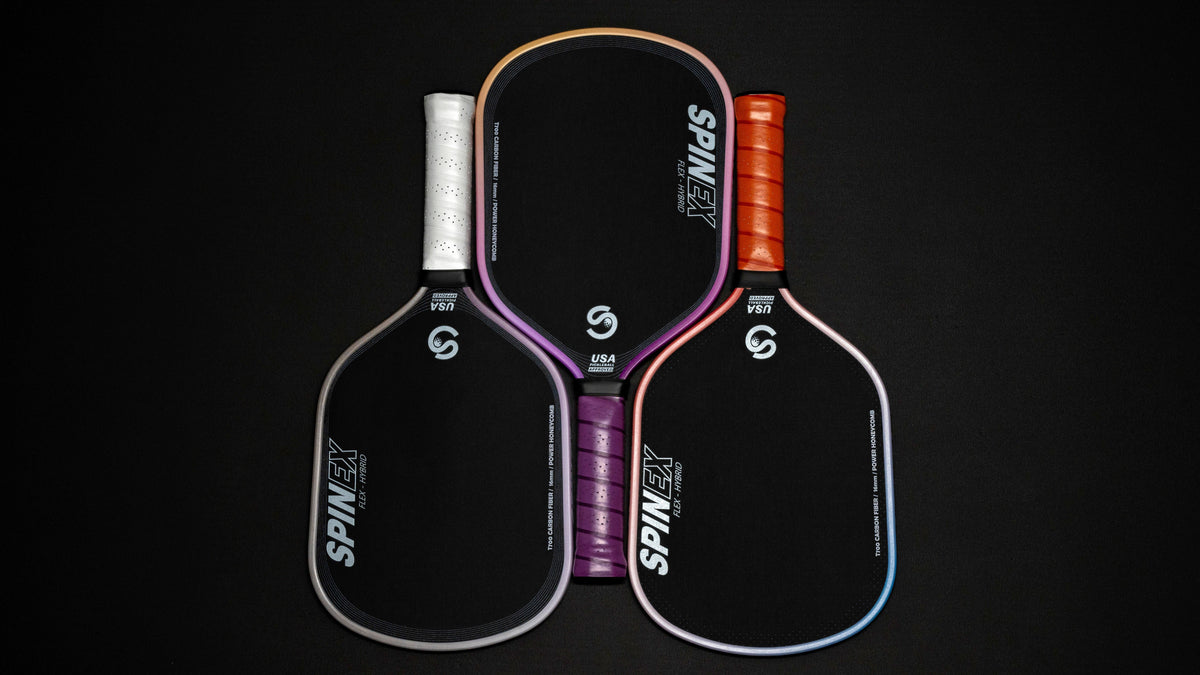
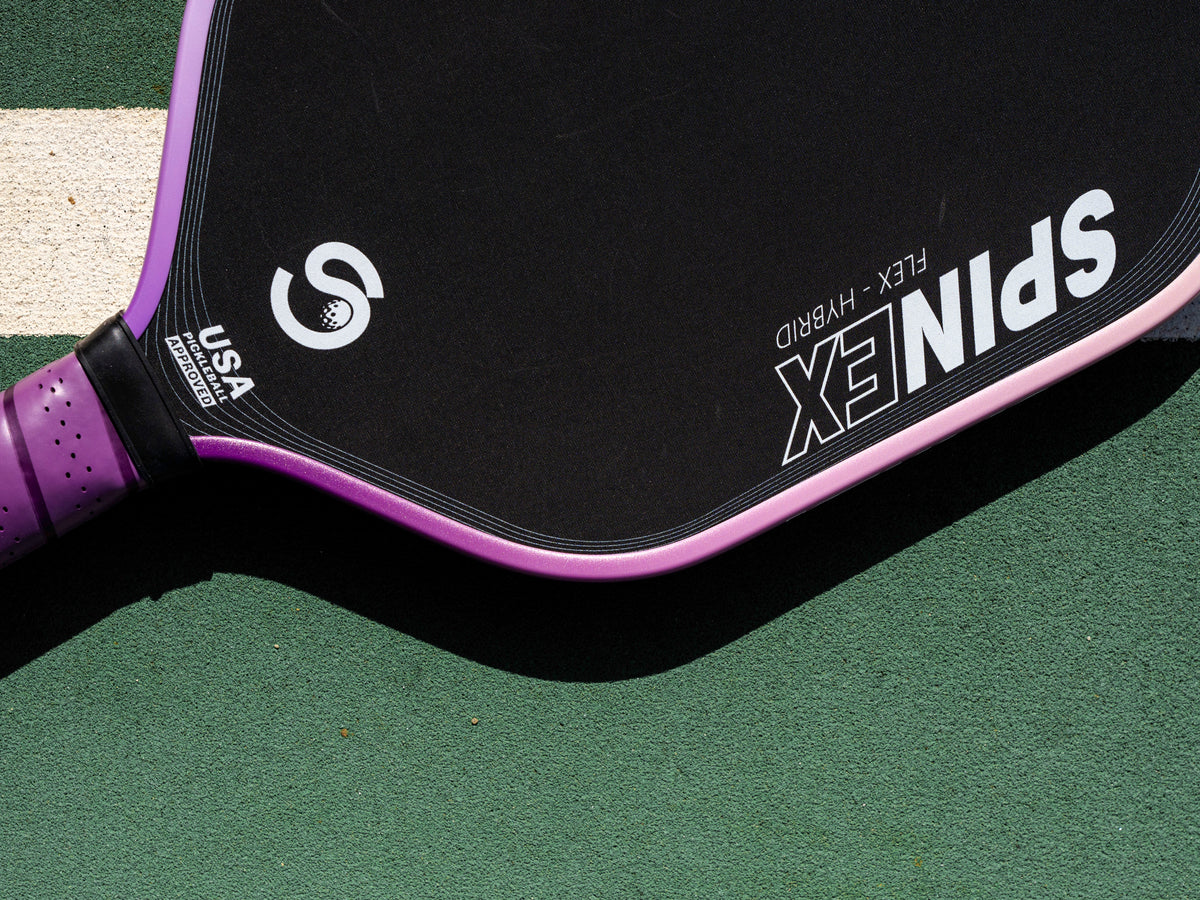
The FLEX Hybrid, for example, uses a T700 carbon fibre face with thermoformed construction. At $199 AUD, it sits in the mid-range for carbon fibre paddles but uses the same grade of carbon found in paddles priced above $250.

Who Should Choose Carbon Fibre?
Carbon fibre suits players who value touch, consistency, and long-term durability. Specifically, consider carbon fibre if you:
- Play two or more times per week and want a paddle that holds up
- Prefer a control-oriented style with dinks, drops, and resets
- Want to develop spin on serves and third-shot drops
- Plan to keep improving and don't want to upgrade again in six months
Players moving from a starter set to their first serious paddle often find carbon fibre the smarter investment. Buying better once costs less than buying cheap twice. If you're comparing options, our guide to the best pickleball paddles in Australia covers several carbon fibre models across different price points.
Who Should Choose Fibreglass?
Fibreglass still has a place, especially for players who prioritise power or are testing the sport before committing. Consider fibreglass if you:
- Mostly play casual rallies and want easy power without a big swing
- Prefer a softer, more forgiving feel on contact
- Are buying your first paddle to try pickleball before investing more
- Play infrequently and don't need extended durability
Fibreglass paddles also tend to have a larger sweet spot due to the flex in the face. For newer players still developing their technique, that forgiveness can be genuinely helpful.
Quick Comparison Table
| Feature | Carbon Fibre | Fibreglass |
|---|---|---|
| Playing style | Control, spin, touch | Power, pop, drives |
| Tensile strength | 3,500 to 7,000 MPa | 1,500 to 2,500 MPa |
| Density | 1.6 g/cm³ | 2.5 g/cm³ |
| Spin durability | 12 to 18 months | 3 to 8 months |
| Heat tolerance | Up to 260°C | Up to 150°C |
| Sweet spot | Smaller, more responsive | Larger, more forgiving |
| Price range (AUD) | $100 to $300 | $40 to $150 |
| Best for | Improving and competitive players | Casual and beginner players |

Making the Right Choice in Australia
The Australian pickleball market has grown quickly, and most specialist retailers now stock both materials. If you're buying online, brands like Spinex, CRBN, Joola, and Selkirk all offer carbon fibre options that ship within Australia.

For players who know they'll stick with pickleball, a mid-range carbon fibre paddle between $100 and $200 AUD is the sweet spot for value. You get T700-grade carbon, proper thermoformed construction, and durability that justifies the price over time. You can browse compare paddles side by side options to compare specs and pricing.
If you're still unsure, consider starting with a pickleball set that includes a carbon fibre paddle. Sets let you try the sport with proper equipment and often cost less than buying a paddle and balls separately.

Spinex FLEX Hybrid
Control-focused all-court paddle. 6-layer T700 carbon face, 16mm thermoformed core, USAP-approved.
A$199
Shop the FLEX Hybrid →Frequently Asked Questions
Is a carbon fibre paddle better than fibreglass?
For most regular players, yes. Carbon fibre offers better control, longer-lasting spin texture, and superior durability. A carbon fibre paddle maintains peak performance for 18 to 24 months, roughly double the lifespan of a fibreglass paddle. Fibreglass is still a solid choice for casual players who prioritise power and don't need extended durability.
Are carbon fibre pickleball paddles worth the extra cost?
A carbon fibre paddle at $150 to $250 AUD that lasts 18 months can cost less per playing session than a $60 fibreglass paddle replaced every 8 months. If you play regularly, the durability and performance consistency make carbon fibre the better value over time.
What does T700 carbon fibre mean on a paddle?
T700 refers to a high-grade carbon fibre manufactured by Toray Industries in Japan. It has a tensile strength of approximately 4,900 MPa, making it about 40% stronger than T300 carbon fibre used in budget paddles. T700 delivers a crisper feel and longer-lasting surface texture.
Can beginners use a carbon fibre paddle?
Yes. Carbon fibre paddles are not restricted to advanced players. Beginners who plan to play regularly benefit from starting with carbon fibre because the paddle rewards developing good technique. A T700 NOVA like NOVA costs A$139, so carbon does not have to wait until your second paddle. The main adjustment is generating power through swing mechanics rather than relying on the paddle's flex.
Does carbon fibre or fibreglass give more spin?
Carbon fibre generates more spin and retains that spin capability longer. Raw carbon fibre has a naturally gritty texture that grips the ball, and this texture is structural rather than a spray-on coating. USA Pickleball limits surface roughness to 40 microns, and carbon fibre faces typically sit closer to that maximum.
How long does a fibreglass paddle last?
With regular play (two to three sessions per week), a fibreglass paddle typically lasts 6 to 8 months before the surface texture fades and the face starts losing its pop. The material is also more susceptible to chipping and delamination from heat exposure compared to carbon fibre.
What is the difference between graphite and carbon fibre paddles?
Graphite and carbon fibre are closely related materials. Graphite paddles use a thinner layer of carbon material, resulting in a lighter but less textured face. Modern carbon fibre paddles use thicker, woven carbon faces that provide more spin and a firmer feel. Most current premium paddles have moved to carbon fibre over graphite.
Is thermoformed construction the same as carbon fibre?
No. Thermoforming is a manufacturing process, not a material. It bonds the face and core under heat and pressure, creating a single sealed unit with no air gaps. Thermoformed paddles can use carbon fibre, fibreglass, or other face materials. When combined with carbon fibre, thermoforming enhances the paddle's consistency and durability.

Leave a comment
This site is protected by hCaptcha and the hCaptcha Privacy Policy and Terms of Service apply.