
Pickleball paddle weight is the single spec that affects how a paddle feels in your hand more than any other factor. Most paddles weigh between 7.0 and 8.5 ounces (198 to 241 grams), and even a difference of half an ounce changes how you swing, how quickly you react at the net, and how your arm feels after 90 minutes of play.
Getting the weight right matters because it directly shapes three things: power, control, and comfort. A heavier paddle drives the ball deeper with less effort. A lighter paddle moves faster through the air and gives you more touch on soft shots. And somewhere in between sits a balance point that works for your body, your playing style, and your skill level.
This guide breaks down the three main weight categories, explains how each one affects your game, and helps you figure out which range suits you best.
Key Takeaways
- Lightweight paddles (under 7.3 oz / 207g) offer faster swing speed and better control at the net, but generate less power on drives.
- Midweight paddles (7.3 to 8.3 oz / 207 to 235g) balance power and control and suit most players, especially beginners.
- Heavyweight paddles (over 8.3 oz / 235g) produce more power with less swing effort but can cause fatigue over long sessions.
- Your sport background, playing frequency, and any joint concerns should all factor into your choice.
- Starting midweight and adjusting from there is the most reliable approach for new players. For reference, a NOVA like NOVA sits at 225g, which is squarely in that range.

- Paddle Weight in Grams, Ounces and kg: Conversion Chart
- Why Paddle Weight Matters More Than You Think
- The Three Pickleball Paddle Weight Categories
- How Weight Affects Power, Control, and Spin
- Choosing the Right Weight for Your Playing Style
- Can You Change Your Paddle's Weight?
- Weight and Core Thickness: How They Work Together
- Quick Reference: Paddle Weight by Player Profile
- Common Mistakes When Choosing Paddle Weight
- How to Test Paddle Weight Before Buying
- Frequently Asked Questions
- Finding Your Ideal Paddle Weight
Paddle Weight in Grams, Ounces and kg: Conversion Chart
Paddle specs are quoted in ounces in the US and in grams almost everywhere else, which is why the same paddle can look "light" on one site and "standard" on another. One ounce is 28.35 grams. Here is the full range converted, with what each point on the scale means in practice.

| Ounces | Grams | Kilograms | What it means |
|---|---|---|---|
| 7.0 oz | 198g | 0.198 kg | Very light: fast hands, more arm effort on drives |
| 7.3 oz | 207g | 0.207 kg | Lightweight/midweight boundary |
| 7.5 oz | 213g | 0.213 kg | Lower midweight: common beginner starting point |
| 7.8 oz | 221g | 0.221 kg | Core of the midweight range |
| 8.0 oz | 227g | 0.227 kg | Upper-mid: stable, still manoeuvrable |
| 8.3 oz | 235g | 0.235 kg | Midweight/heavyweight boundary |
| 8.5 oz | 241g | 0.241 kg | Heavy: power with less swing effort, slower hands |
So how much does a pickleball paddle weigh on average? Across the market, most paddles land between 7.5 and 8.0 oz (213 to 227g). Weight is one spec the rulebook leaves open: USA Pickleball's equipment standards regulate paddle dimensions and surface properties but set no weight limit at all. Source: USA Pickleball equipment standards.
Why Paddle Weight Matters More Than You Think
Weight is the first thing you notice when you pick up a paddle, and it influences every shot you hit. A paddle that feels too heavy will slow your reaction time during fast exchanges at the kitchen line. One that feels too light may leave you swinging harder than necessary on groundstrokes, which tires your arm faster than a slightly heavier option would.
The reason comes down to physics. A heavier object carries more momentum at the same swing speed, which means it transfers more energy to the ball on contact. But swinging a heavier paddle at the same speed requires more muscular effort. Over the course of a typical recreational session (roughly 60 to 120 minutes and hundreds of swings), that extra effort adds up.
Worth knowing: most pickleball paddles on the market weigh between 7.0 and 8.5 ounces. Within that 1.5-ounce range, every half-ounce shift noticeably changes how a paddle handles during fast net exchanges and extended rallies.
The Three Pickleball Paddle Weight Categories
The industry broadly groups paddles into three weight classes. The exact cutoff points vary slightly between brands, but these ranges are the most widely used.
Lightweight: Under 7.3 oz (Under 207g)
Lightweight paddles are built for speed. They allow faster swing acceleration, quicker transitions between forehand and backhand, and more precise placement on dink shots. Players who rely on touch, reaction speed, and net play often prefer this category.
The trade-off is power. Because there is less mass behind the ball at contact, you need to generate more swing speed yourself to hit deep drives. Over long rallies, that extra effort can cause arm fatigue, particularly in the forearm and elbow. Counterintuitively, lighter paddles can sometimes cause more strain than midweight options because your muscles absorb more of the impact energy.
Best suited for: players with quick hands who prioritise control, doubles specialists focused on the net game, and anyone with shoulder issues who needs to minimise the load on that joint.
Midweight: 7.3 to 8.3 oz (207 to 235g)
Midweight is where most players land, and for good reason. This range offers enough mass to generate solid power on drives without sacrificing the manoeuvrability you need for quick volleys. Most paddle manufacturers design their flagship pickleball paddles in this bracket because it appeals to the widest range of playing styles.
For beginners especially, midweight is the safest starting point. You get a natural balance of power and control while your technique develops, and you avoid the extremes that can reinforce bad habits (swinging too hard with a light paddle or muscling shots with a heavy one).
Worth knowing: most manufacturers centre their flagship models in the midweight bracket, and it is the default recommendation you will hear at most clubs. If you are unsure, this is the range to start in.
Heavyweight: Over 8.3 oz (Over 235g)
Heavy paddles reward players who have developed consistent swing mechanics and want maximum power with minimal effort. The added mass does the work for you on serves and drives, letting you use a shorter, more compact swing while still generating pace.
The downside is reaction time. In fast-paced net exchanges, an extra ounce of weight slows your paddle transitions by a fraction of a second. Over the course of a quick hands battle, that fraction matters. Heavier paddles also increase the risk of elbow and wrist strain for players who play frequently (3 or more sessions per week).
Best suited for: singles players who hit from the baseline, former tennis or racquetball players used to heavier racquets, and players who play shorter sessions (under 60 minutes).

How Weight Affects Power, Control, and Spin
Understanding the relationship between weight and performance helps you make a more informed choice. Here is how each aspect breaks down.

Power
Heavier paddles generate more power at the same swing speed. If you have a smooth, consistent stroke, a heavier paddle lets you hit harder without swinging faster. But if your technique is still developing, a heavy paddle can encourage arm-dominant swings rather than full-body rotation, which actually reduces power efficiency over time.
Control
Lighter paddles are generally easier to position precisely. At the net, where reaction windows can be under half a second, a lighter paddle lets you adjust your angle faster. Midweight paddles still offer strong control for most situations, particularly on third-shot drops and resets where touch matters as much as placement.
Spin
Spin generation depends more on paddle surface texture and swing path than on weight alone. However, a lighter paddle allows faster swing acceleration through the contact zone, which can increase topspin RPM. The difference is modest compared to surface grit, but it is measurable. Carbon fibre faces, like woven surfaces built from Toray's T700 fibre grade, provide the grip on the ball that actually creates spin (Toray TORAYCA). If spin is a priority, surface material matters more than weight. You can read more about face materials in our guide to carbon fibre vs fibreglass paddles.
Choosing the Right Weight for Your Playing Style
Your ideal paddle weight depends on several personal factors. Here is a practical framework to narrow down the right range.
Your Sport Background
If you come from tennis, squash, or badminton, you already have racquet-sport muscle memory. Tennis players often feel comfortable with paddles at 8.0 oz or above because they are used to swinging a 10 to 12-ounce racquet. Badminton and table tennis players typically prefer the lighter end (7.0 to 7.6 oz) because their sports reward wrist speed over mass.
If pickleball is your first racquet sport, start in the midweight range around 7.6 to 8.0 oz. This gives you enough stability on off-centre hits without being so heavy that it punishes developing technique.
Your Playing Frequency
Players who are on the court 4 or more times per week should pay extra attention to weight. Heavier paddles compound arm fatigue over high-frequency play. If you play daily, staying at 8.0 oz or under reduces the cumulative load on your elbow and wrist tendons.
Your Physical Considerations
Joint health is a real factor. Players dealing with tennis elbow, golfer's elbow, or wrist tendonitis should avoid extremes. Player experience and coaching consensus suggest that very light paddles (under 7.2 oz) can actually worsen elbow strain because your arm absorbs more vibration on each hit. A midweight paddle with a thicker core (16mm) tends to dampen vibration better and reduce impact stress on joints.
Worth knowing: midweight paddles with thicker cores (16mm) absorb more vibration at impact than thinner, lighter alternatives. For players who experience elbow discomfort, the combination of moderate weight and a 16mm polymer honeycomb core tends to offer the best balance of performance and joint comfort. Persistent pain is a reason to see a professional, not to keep shopping for gear.

Can You Change Your Paddle's Weight?
Yes, and it is more common than most beginners realise. Lead tape is the most popular method. Small strips of adhesive lead tape can be applied to the edge guard or face of a paddle to add weight in specific areas.
Adding weight to the top of the paddle (the head) increases power but slows swing speed. Adding weight to the sides of the paddle head widens the sweet spot. Adding weight near the handle shifts the balance point closer to your hand, making the paddle feel more manoeuvrable without changing the total mass.
Most lead tape strips add between 0.5 and 2 grams each. For reference, 1 ounce equals roughly 28 grams, so you would need quite a few strips to change the weight by a full ounce. Most players add 3 to 8 grams total, which is enough to fine-tune the feel without dramatically changing the paddle's character.
Start small. Add one or two strips, play a full session, and evaluate before adding more. Removing tape is easy, so the process is completely reversible.
Weight and Core Thickness: How They Work Together
Paddle weight does not exist in isolation. Core thickness plays a major role in how weight translates to on-court performance.

A 16mm core paddle at 7.9 oz will feel and play very differently from a 14mm core paddle at the same weight. The thicker core provides a larger sweet spot, more vibration dampening, and a softer feel on contact. The thinner core concentrates the weight into a denser structure, which can add pop but reduces forgiveness on off-centre hits.
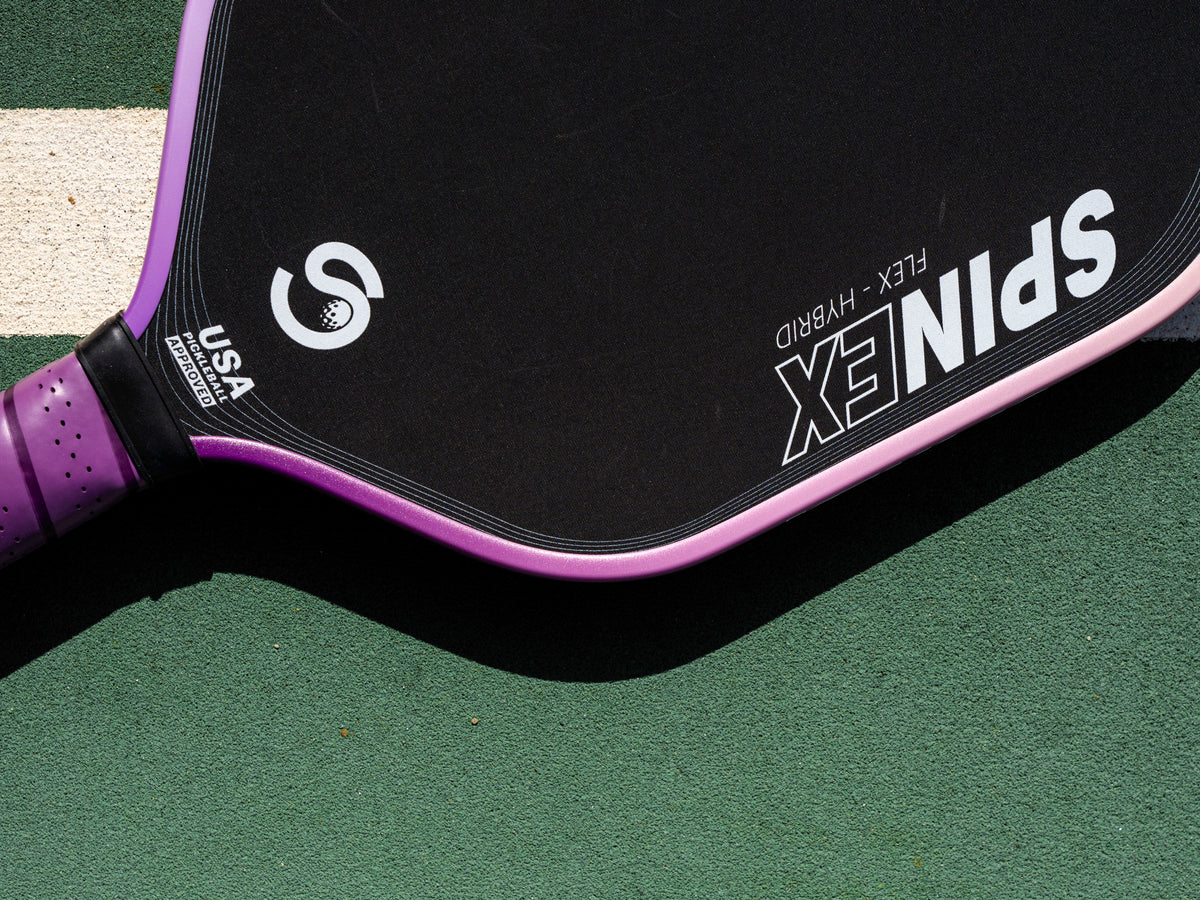
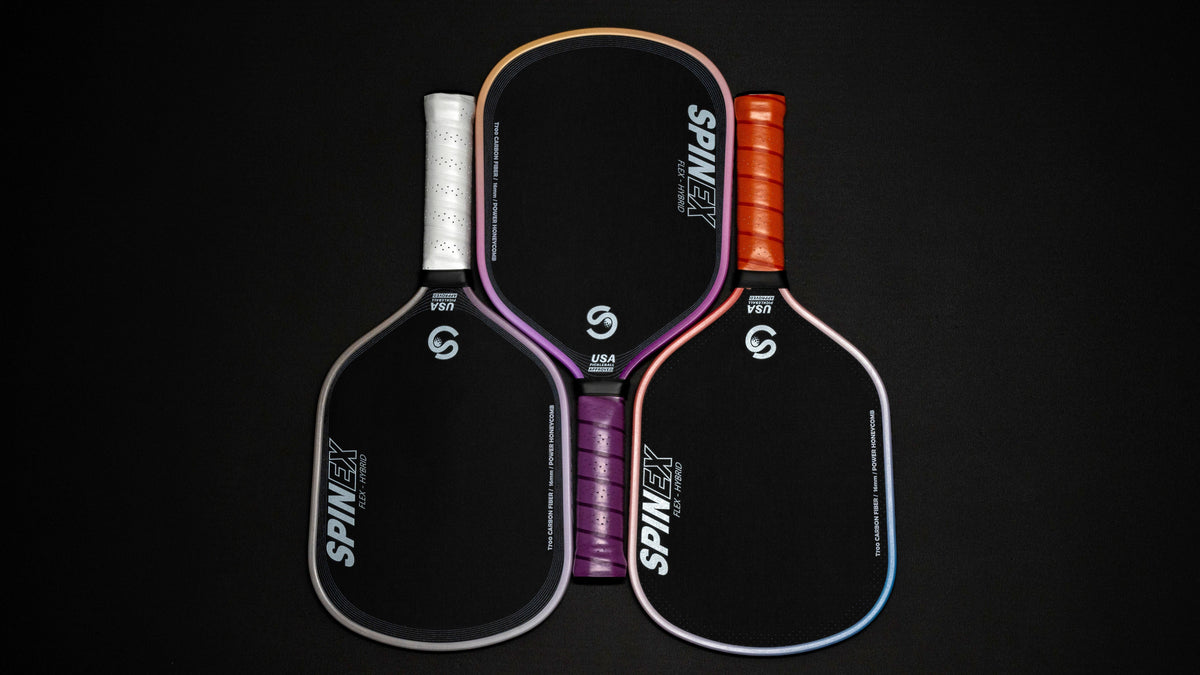
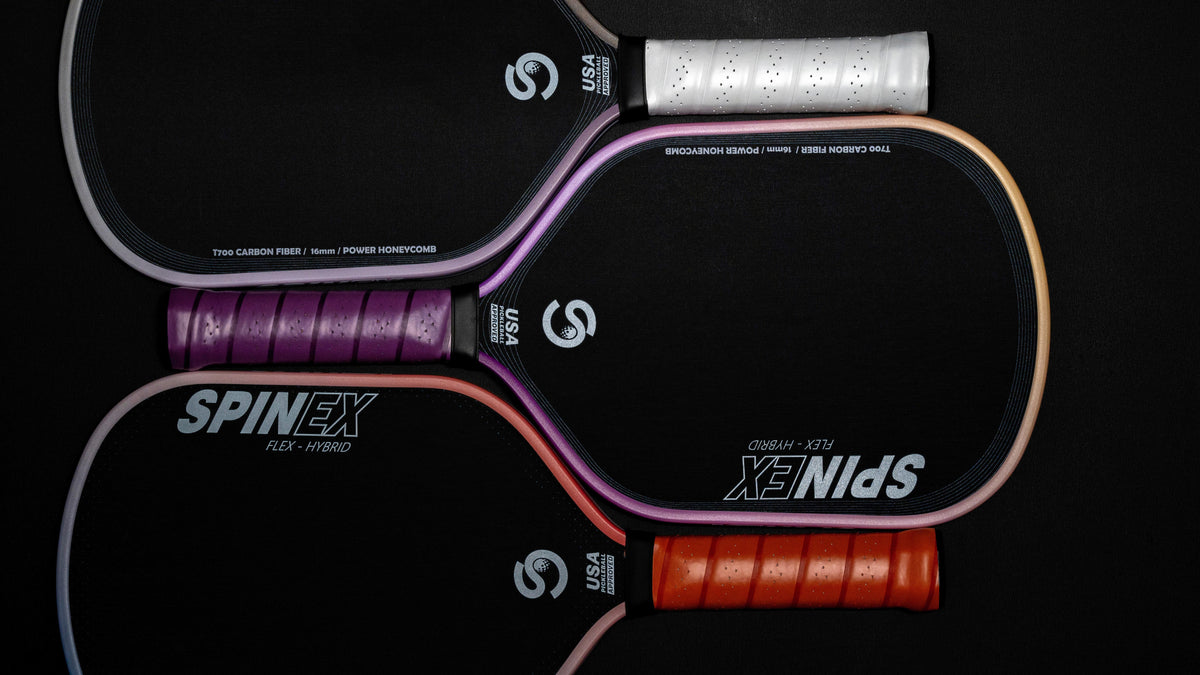
For most recreational and improving players, the combination of midweight (7.8 to 8.2 oz) and a 16mm core offers the most forgiving, versatile setup. This is the configuration used by the FLEX Hybrid, which pairs a 16mm polymer honeycomb core with a T700 carbon fibre face at a playing weight of 7.8 to 8.2 oz (221 to 232g). That puts it firmly in the midweight sweet spot where most players find their best balance of power, control, and comfort.
Player preference backs this up. At our February 2026 demo day at Sydney Olympic Park Pickleball Courts, where more than 30 players tried the FLEX Hybrid alongside thinner demo paddles, 80% of testers preferred the 16mm core.
Quick Reference: Paddle Weight by Player Profile
| Player Profile | Recommended Weight | Why |
|---|---|---|
| Complete beginner | 7.5 to 8.0 oz | Forgiving, stable, develops good habits |
| Former tennis player | 7.8 to 8.4 oz | Familiar heft, smooth power transfer |
| Doubles net specialist | 7.0 to 7.5 oz | Fast hands, quick transitions |
| Singles baseline player | 8.0 to 8.5 oz | More power on drives and serves |
| Player with elbow issues | 7.5 to 8.0 oz (16mm core) | Moderate mass, maximum vibration dampening |
| Frequent player (4+ sessions/week) | 7.3 to 7.8 oz | Reduces cumulative arm strain |

Common Mistakes When Choosing Paddle Weight
A few patterns come up regularly among newer players making their first paddle purchase.

Going too light because it "feels easier." A very light paddle does feel easier to wave around off the court. But during actual play, you end up overswinging to compensate for the lack of mass, which tires your arm faster and reduces shot consistency.
Copying a pro player's setup. Professional players have years of developed technique and conditioning. A paddle that works for a touring pro may be completely wrong for a recreational player who plays twice a week. Their weight preferences reflect their specific game, not a universal recommendation.
Ignoring total weight in favour of balance point. Two paddles can weigh the same but feel very different depending on where the weight sits. A head-heavy 7.8 oz paddle plays closer to an 8.2 oz paddle in terms of power, while a handle-heavy 8.0 oz paddle may feel lighter and more manoeuvrable than its actual weight suggests. Always swing a paddle before deciding, if possible.
How to Test Paddle Weight Before Buying
If you can try before you buy, here is a simple 3-step test that takes about 10 minutes.

Step 1: The kitchen line test. Stand at the non-volley zone and hit 20 to 30 quick volleys. Focus on how fast you can transition between forehand and backhand. If the paddle feels sluggish on the switch, it may be too heavy for your net game.
Step 2: The drive test. Move to the baseline and hit 15 to 20 forehand drives. If you feel like you need to muscle the ball to get depth, the paddle may be too light. If the ball consistently flies long without you trying, it may be too heavy for your current swing speed.
Step 3: The fatigue check. After 10 minutes of continuous play, notice your forearm. If it feels tight or strained, the weight is not right for your body. A well-matched paddle should feel comfortable even after extended use.
If you do not have access to demo paddles, visiting your local pickleball club is usually the fastest way to try different weights. Most club players are happy to let you hit with their paddle for a few minutes. You can also compare paddle specifications online to see how different weight points stack up before making your choice.

Spinex FLEX Hybrid
Control-focused all-court paddle. 6-layer T700 carbon face, 16mm thermoformed core, USAP-approved.
A$199
Shop the FLEX Hybrid →Frequently Asked Questions
What is the standard weight for a pickleball paddle?
Most pickleball paddles weigh between 7.0 and 8.5 ounces (198 to 241 grams). The most common weight range across all brands and skill levels is 7.5 to 8.0 ounces, which falls in the midweight category. There is no official weight limit in pickleball rules, but paddles heavier than 9.0 ounces are rare.
How much does a pickleball paddle weigh in grams?
Most pickleball paddles weigh between 198 and 241 grams, with the majority of models landing between 213 and 227 grams (7.5 to 8.0 oz). Lightweight paddles sit under 207 grams and heavyweight paddles over 235 grams. In our own March 2026 batch check, 20 FLEX Hybrid paddles averaged 225 grams.
What is a pickleball paddle weight in kg?
In kilograms, pickleball paddles weigh roughly 0.2 to 0.24 kg. A typical midweight paddle is about 0.22 kg. Specs are almost always listed in ounces or grams, so kilogram figures mostly appear on shipping labels rather than spec sheets.
Is a lighter or heavier pickleball paddle better for beginners?
A midweight paddle between 7.5 and 8.0 ounces is the best starting point for most beginners. This range provides enough stability to smooth out inconsistent swings while remaining light enough to develop proper technique. Avoid going below 7.2 oz or above 8.3 oz until you have a clear sense of your playing style.
Does paddle weight affect tennis elbow?
Yes. Both very light and very heavy paddles can aggravate elbow issues. Very light paddles (under 7.2 oz) transmit more vibration to your arm because there is less mass to absorb the impact. Very heavy paddles (over 8.3 oz) increase the load on your elbow tendons during every swing. A midweight paddle with a 16mm core offers the best vibration dampening and the lowest strain on elbow joints.
Can I add weight to a pickleball paddle that feels too light?
Yes. Lead tape is the most common method. Apply small strips (each adding 0.5 to 2 grams) to the paddle head, sides, or handle to adjust the total weight and balance point. Most players add 3 to 8 grams total. The process is completely reversible since the tape peels off cleanly.
How much does one ounce of paddle weight actually matter?
More than you might expect. One ounce equals approximately 28 grams, and over hundreds of swings per session, that difference affects swing speed, arm fatigue, and power output. A half-ounce change is noticeable to most intermediate players, and a full-ounce change significantly alters how a paddle performs.
What weight paddle do professional pickleball players use?
Most professional players use paddles in the 7.8 to 8.4 oz range, though individual preferences vary widely. Some pros start with a lighter base paddle and add lead tape to customise the weight and balance to their exact preferences. The important point is that pros choose weight based on their specific game style, not a one-size-fits-all number.
Should I choose paddle weight based on my height or strength?
Height has minimal impact on ideal paddle weight. Grip strength and playing frequency matter more. A physically strong player who plays infrequently can handle a heavier paddle without issues. A lighter player who plays 5 times a week may benefit from staying in the lower midweight range (7.3 to 7.8 oz) to prevent repetitive strain.
How does paddle weight relate to core thickness?
Core thickness and weight interact to determine how a paddle feels and performs. A thicker core (16mm) paired with a midweight build (7.8 to 8.2 oz) creates the largest sweet spot and the best vibration absorption. A thinner core (14mm) at the same weight feels stiffer and more powerful but less forgiving. For most players, the 16mm midweight combination is the most versatile option. Learn more in our guide to 16mm pickleball paddles.
Finding Your Ideal Paddle Weight
Paddle weight is personal. The numbers in this guide give you a solid starting framework, but the best way to find your weight is to play with different options and pay attention to how your arm feels after a full session.
For most players picking their first serious the paddles we build, the midweight range (7.3 to 8.3 oz) is the right place to start. Within that range, a paddle around 7.8 to 8.2 oz with a 16mm core offers the best all-round performance for recreational and improving players.
If you are building your first setup or upgrading from a starter paddle, Spinex offers paddles designed in that midweight sweet spot with T700 carbon fibre faces and thermoformed construction for durability and consistent feel across the entire face.
Update log
- August 2026: Added the grams/ounces/kg conversion chart and average-weight section, our 20-paddle batch weigh-in data, demo-day core preference data, external sources, and a rewritten summary. Specs re-verified against the live store.
- April 2026: Originally published.
Last reviewed: August 2026. Batch weigh-in data covers 20 paddles measured in March 2026; method details are on our How We Test page. This article is written and published by the Spinex Pickleball team. We design paddles and sell pickleball gear in Australia; where we recommend Spinex products it is because we believe they are a fair fit for the problem being discussed. Get in touch if you have questions.

Leave a comment
This site is protected by hCaptcha and the hCaptcha Privacy Policy and Terms of Service apply.