Most "best pickleball paddles under A$150" lists pad themselves with paddles that are technically dead before you have improved enough to outgrow them. That is the honest tension in this bracket. Australian pricing typically lands well above the equivalent US sticker once freight, GST and local distribution are added, so a US$99 paddle that reads as a steal in a Florida review often shows up around A$149 to A$169 on a Sydney or Perth shelf. The result is a category full of fibreglass-faced paddles that look the part, feel fine for the first six hours of play, and then go soft.
This guide is for a player who wants honest answers. We cover what you actually get for under A$150 in Australia, the specs that matter, four paddles worth looking at, and the moment when paying a bit more is the smarter buy.
- Under A$150 in Australia means entry-level composite or fibreglass paddles, occasionally an entry-carbon model on promotion.
- Brand sticker prices shift week to week. Check the live AU price before you buy.
- Prioritise core thickness (13 to 16 mm), grip size, and a USA Pickleball–approved face over colourway or marketing copy.
- T700 carbon no longer requires stretching past the bracket. Our own NOVA series brings a T700 face and a 16 mm thermoformed core in at A$139, and the step up to A$199 now buys construction and tournament approval rather than better material.
How much paddle do you really get under A$150 in Australia?
Three rough tiers sit below A$150 in the Australian market.

A$25 to A$70, supermarket and big-box. Kmart, Big W and similar retailers stock pickleball sets at this price. The paddles are wood or basic composite, the cores are thin, and the surface texture is smooth enough that spin is essentially decorative. These are fine for one social hit at the park. They are not the paddle you take to a club night two weeks later.
A$70 to A$120, entry composite. This is where mainstream sports brands sell their cheapest serious paddle. Wilson, HEAD, ProKennex and Onix all have entry-level composite or fibreglass options here. You get a real polymer honeycomb core, an edge guard, and a grip that lasts a season. The sweet spot is small and the face goes soft sooner than carbon, but for a beginner playing once a week, these will see out the first season of play.
A$120 to A$149, entry carbon and premium fibreglass. The interesting end of the bracket. Joola, Selkirk, HEAD and CRBN all overlap this band on promotion. A few entry-carbon paddles dip in here when stock turns over, and a couple of brands run year-round at A$129 to A$149 RRP. This is the only sub-A$150 tier where you can get a paddle that still feels right after twelve months of weekly play.
What to actually look for under A$150
Five specs do most of the work in this price bracket. Treat them as the checklist.

Core thickness. Look for 13 mm to 16 mm. Thicker cores forgive off-centre hits and absorb pace, which is what you want while you are still figuring out where the sweet spot is. Anything thinner than 13 mm at this price is usually trying to mimic a power paddle and will be unforgiving.
Face material. Fibreglass is fine for under A$120. It hits hard, has a clear sweet spot, and is honest about what it is. Composite is the broad middle. Carbon faces have flooded into this bracket through 2026, so the word alone no longer tells you much. The grade is what matters: much of what sells under A$150 is entry-grade T300 or a recycled blend, though T700 has now reached this price too, including in our own range. Either way, carbon tends to outlast fibreglass in surface texture. T700 is the high-tensile carbon fibre grade developed by Toray that has become the preferred face for paddles built to last, and it is now widely used in aerospace and high-performance sports equipment. Reference: carbon fibre grades.
Weight. Most adult players are well served by 7.6 to 8.2 oz. Lighter feels quicker but punishes shoulders on long sessions. Heavier helps power but slows hands at the kitchen. Read the spec sheet. Do not trust marketing words like "lightweight" without an actual number in ounces or grams.
Grip size. The most common adult size in Australia is 4¼ inches. If the spec sheet does not list the circumference at all, that is a warning sign about who built the paddle.
USAP approval. Check the face is on the USA Pickleball approved list. Pickleball Australia's tournament play relies on USAP-approved equipment via the GPF rulebook framework. Pickleball Australia publishes tournament guidelines through the 2026 Official Rule Book.
Top pickleball paddles under A$150 in Australia worth considering
The four below show up most often in honest Australian price ranges below A$150. We have grouped them by what they are good at, not by ranking position. Always confirm the current AU sticker before you buy because brand sale cycles shift month to month.

| Paddle | Typical AU price (2026) | Face | Best for |
|---|---|---|---|
| Joola Vision CGS | A$129 to A$149 | Composite (CGS) | Tennis converters wanting a head-heavy feel |
| Selkirk SLK Latitude | A$99 to A$129 | Fibreglass | Pure beginners who want a forgiving sweet spot |
| HEAD Radical Tour | A$119 to A$139 | Composite (Graphite hybrid) | Players who already know they like a heavier paddle |
| Wilson Echo / Juice | A$79 to A$119 | Composite | Once-a-week casual social players |
Joola Vision CGS
Joola's Vision CGS is the option most often visible at Australian retailers under A$150. It is a composite face on a 13 mm core, slightly head-heavy, which suits players coming over from tennis who want swing weight to load into the ball. Spin grip is modest. The honest weakness is surface durability, as the face wears noticeably after several months of outdoor play in Australian sun.

Selkirk SLK Latitude
Selkirk's SLK entry line lands around A$99 to A$129 in Australia and is one of the friendlier paddles for genuine beginners. The fibreglass face is forgiving on off-centre hits, the shape is wide and balanced, and grip quality is better than most paddles at this price. A sensible first paddle for someone who wants to test the sport without overcommitting.

HEAD Radical Tour
HEAD Radical Tour sits between A$119 and A$139 depending on sale cycle. The composite face has a graphite element, which adds crispness on contact compared with pure fibreglass. It plays a touch heavier than the others on this list, suiting players who already know they prefer head weight. New players sometimes find it tiring in long sessions.
Wilson Echo and Juice
Wilson's entry pickleball range typically sits at A$79 to A$119 in Australia. Basic composite build, functional grip. Reasonable for casual once-a-week social players who want a known brand badge.

| Measurement | Result |
|---|---|
| Paddles weighed | 20 units |
| Production batch | March 2026 |
| Mean weight | 7.95 oz |
| Minimum / maximum | 7.80 oz / 8.15 oz |
| Standard deviation | 0.09 oz |
That batch-level tightness matters in this bracket because most paddles below A$150 are not weighed at the unit level. Two off-the-shelf composite paddles in the same model can swing differently, which is the kind of variability that is hard to detect on the rack and easy to feel on court. If you are training your hands on a specific feel, batch consistency is one of the silent things you pay for as you step up in price.
When paying A$30 to A$50 more is the smarter buy
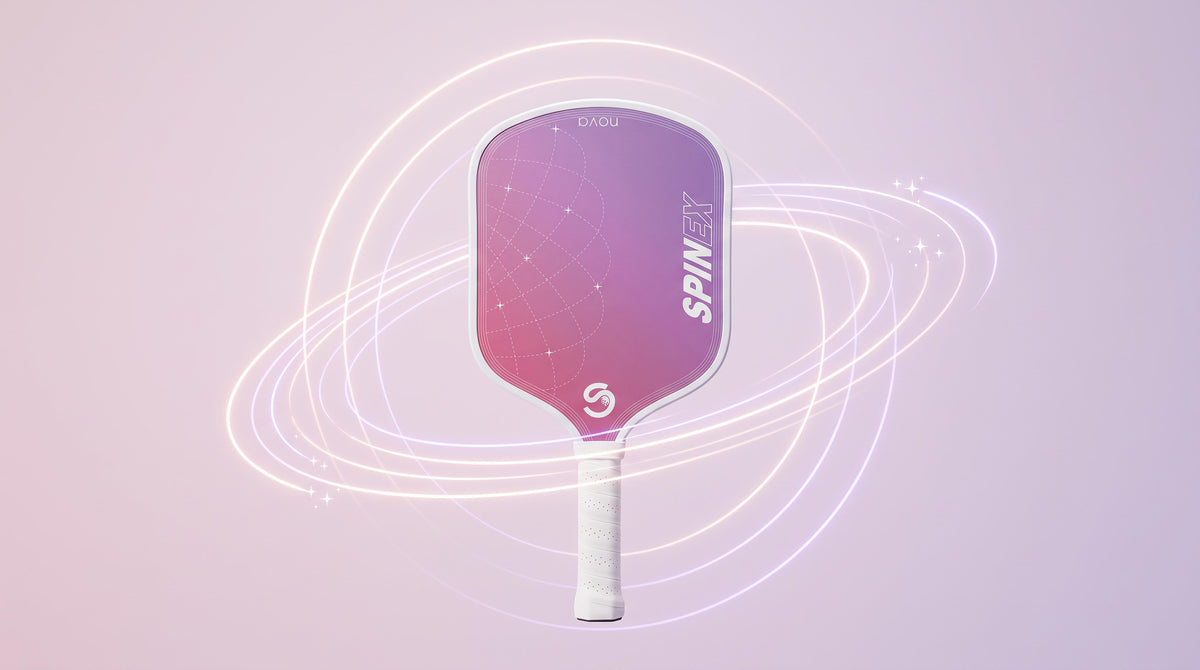
This is the question most under-A$150 buyers should ask themselves before checkout, and since this guide was first published the shape of it has changed, partly because of us. Our NOVA series launched in August 2026 at A$139 with a T700 carbon face, a 16 mm thermoformed core and a foam-filled perimeter. It sits inside the bracket rather than above it, which means the material jump no longer costs A$199.
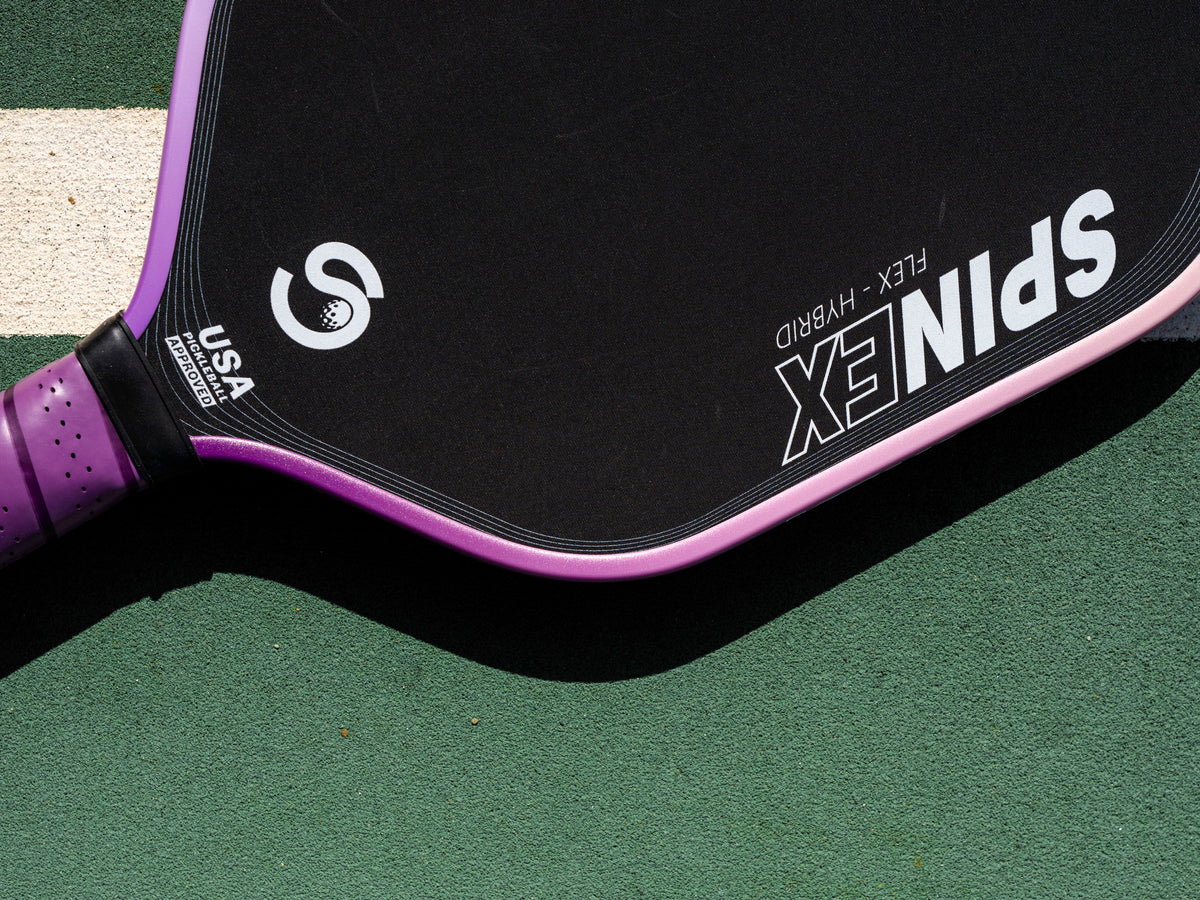
Our own FLEX Hybrid sits at A$199 RRP. It uses a thermoformed unibody build, a 16 mm polymer honeycomb core, and a T700 carbon face. Honest framing: the FLEX Hybrid is not a power paddle and not a beginner-only paddle. It is a control-focused all-court paddle that suits style-conscious improving players who do not want to upgrade again in twelve months. We have tracked five FLEX Hybrid paddles given to local club players since November 2025, and at five-plus months of three to four sessions per week all five remain structurally sound with no core dead spots reported (entry LO002).
So what does the A$70 between the NOVA and the FLEX Hybrid buy? An edgeless one-piece build, a larger foam-filled area, a more responsive core, and USA Pickleball approval. The material is the same. If sanctioned competition is anywhere in your plans, that is the split that matters. If it is not, the NOVA is the honest place to stop.

The Three-Year Paddle Test
Here is the framework we use internally to assess any paddle under A$200, including the four above and our own. We call it the Three-Year Paddle Test. It is three questions:

- Surface integrity. After 36 months of one to two sessions per week, will the face still hold spin? A smooth-from-new fibreglass face usually fails this by month 12. A textured T700 carbon face that is cleaned properly typically passes.
- Core honesty. After 36 months, does the core still sound and feel alive on touch shots, or does it return a dull thud? Thermoformed unibody cores age better than glued cores here.
- Grip pathway. After 36 months, can you still buy a matching replacement overgrip from the original brand? This sounds trivial. It is the single most common reason players abandon a paddle they otherwise like.
Run the Three-Year Paddle Test on any paddle you are considering. Most sub-A$70 paddles fail on all three. Most A$70 to A$120 composites fail on the first question. Entry-carbon paddles in the A$120 to A$149 band often pass two of three. We built the NOVA at A$129 to pass all three: a named T700 face, a thermoformed 16 mm core, and the same replacement overgrips we stock for the FLEX. Above that, A$179 to A$199 buys construction and approval, not a different pass mark.
What is changing in 2026
The under-A$150 bracket is shifting. T700 carbon fibre has become cheaper to source globally as Asian manufacturing capacity has grown, and we expect more entry-carbon paddles to cross into the A$129 to A$149 band through late 2026. The trade-off some brands make to hit that price is thinner core thickness, glued edge construction instead of true thermoformed unibody, or weaker grip components. Read the spec sheet carefully. A T700 face on a 12 mm glued core is still a downgrade from a fibreglass face on a 16 mm thermoformed core.

Update, August 2026: that prediction landed sooner than we expected, and partly because of us. The NOVA series arrived at exactly A$139, with the build this paragraph says to check for rather than the shortcuts it warns about.
Australian distribution remains the other variable. International freight, GST, and local warranty support continue to add roughly A$30 to A$60 over the equivalent US sticker. That gap is unlikely to close, which is why Aussie-owned brands selling direct can often offer better value at this end of the market.

Spinex NOVA
Built for beginners and social play. T700 carbon face, 16mm thermoformed core, forgiving widebody shape.
A$139
Shop the NOVA →Frequently Asked Questions
What is the cheapest pickleball paddle worth buying in Australia?
Around A$99 to A$120 is the lowest sensible entry for a paddle you intend to actually play with weekly. Below A$70 you are essentially buying a trial-once paddle for casual park sessions. Above A$120 you are buying a paddle that should still feel right at the twelve-month mark with reasonable care.
Is the Kmart pickleball set any good?
It is fine for a one-off social hit. The paddles are basic composite, the grips lose tackiness quickly, and the surface is too smooth for meaningful spin. If you decide to keep playing after one or two sessions, you will outgrow it inside a month.
Should I buy a paddle under A$150 or save up for a better one?
Buy under A$150 if you are still deciding whether the sport suits you. If you already know you will keep playing, the question has changed: T700 carbon now exists inside the bracket, so saving up is about construction and tournament approval rather than material. Buying better once is still smarter than buying cheap twice, but better no longer has to mean A$199.
What weight pickleball paddle should I buy as a beginner?
Most adult beginners are well served by 7.6 to 8.0 oz, which is light enough to be quick at the kitchen and heavy enough to drive a clean shot. Avoid anything under 7.4 oz unless you are coming from table tennis and want quick hands at the cost of power. Heavier than 8.3 oz is rarely the right pick for a beginner.
Can I play tournaments with a sub-A$150 paddle in Australia?
Yes, as long as the paddle face is on the USA Pickleball approved equipment list, which Pickleball Australia references through the 2026 Official Rule Book. Most major brand entry models are USAP approved. Always confirm on the brand's own product page before entering a sanctioned event.
How long do pickleball paddles last under A$150?
Realistically about one season of regular play, depending on face material and surface care. In our own demo and durability tracking, fibreglass faces tend to lose meaningful spin grip first, composite cores usually outlast their faces, and thermoformed unibody construction extends total paddle life, which is uncommon at this price. Five FLEX Hybrid paddles tracked in club play since November 2025 have so far recorded zero core dead spots at the five-month mark (entry LO002).
Is carbon fibre worth it under A$150?
Sometimes, with a caveat. Entry-grade T300 carbon appears under A$150 on promotion, and T700 has now reached this price as well, including our own NOVA at A$139. The caveat is the rest of the build: cheap carbon often claws the savings back through thinner cores or weaker edge construction, so read the whole spec sheet. Our carbon fibre vs fibreglass paddle guide covers the differences in detail.
Does Spinex sell a paddle under A$150?
Yes, as of August 2026: the NOVA series at A$139, with a T700 carbon face, a 16 mm thermoformed core and a foam-filled perimeter, in three colourways. When this guide was first published the answer was no, because we could not hit the price without compromising the build. Falling T700 sourcing costs changed that maths through 2026. The trade-offs NOVA does make are deliberate: it keeps a standard edge frame instead of the FLEX Hybrid's edgeless build, and it is not submitted for USAP approval, so it is not the paddle for sanctioned events.
Ready to see what an honest spec sheet looks like at A$139?
Browse the Spinex browse the paddle range range See pickleball paddles for saleFirst published May 2026. Last reviewed and updated August 2026, following the launch of our NOVA series at A$139. Prices and product availability are based on the Australian market as of the review date and shift week to week, so always confirm the live sticker before purchase. Competitor paddle pricing is general AU market awareness and not a specific endorsement. This guide is written and published by the Spinex Pickleball team. We design paddles and sell pickleball gear in Australia; where we recommend Spinex products we believe they are a fair fit for the problem being discussed. Where the better answer is a different brand or a cheaper option we will say so plainly. Get in touch if you have questions or spot something we should fix.

Leave a comment
This site is protected by hCaptcha and the hCaptcha Privacy Policy and Terms of Service apply.